About Artemisia pontica L.
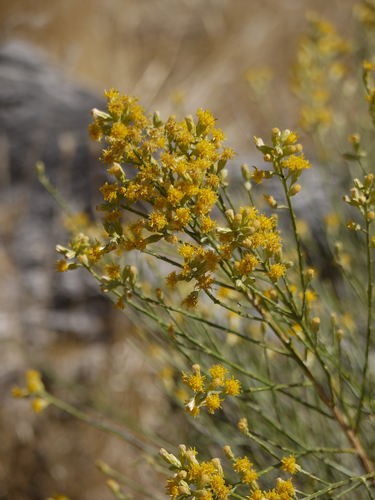
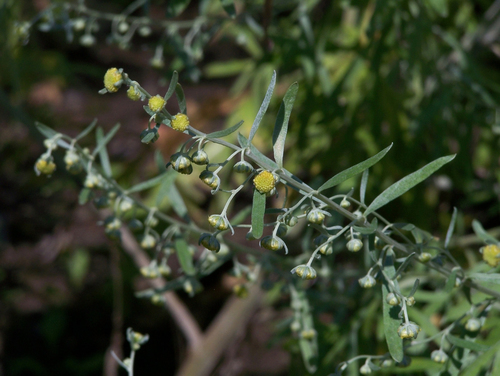
Artemisia pontica L., commonly known as Roman wormwood or small absinthe, is an herb used in the production of absinthe and vermouth. It originated in southeastern Europe, and its specific scientific epithet pontica refers to the Pontus area on the shores of the Black Sea. It has become naturalized across most of Eurasia, ranging from France to Xinjiang, and also grows wild in northeastern North America. It is called "little absinthe" because it is smaller in stature and leaf size than great absinthe, Artemisia absinthium. This species is a rhizomatous perennial herb that grows erect stems up to 100 centimetres (39 inches) tall. It has finely divided, aromatic grey foliage. Its flowers are small and yellowish, produced in loose panicles at the tips of stems. Its essential oil contains cineol, camphor, thujone, borneol, and other components. It is reported to be less bitter than great absinthe, and serves as the principal flavoring for vermouth. It is commercially cultivated in Spain and Lithuania. English botanist John Hill wrote the following about this plant in his work *Virtues of British Herbs*: "The Wormwood wine so famous with the Germans, is made with Roman Wormwood, put into the juice, and work’d with it : it is a strong and an excellent wine, not unpleasant, yet of such efficacy to give an appetite, that the Germans drink a glass with every other mouthful, and that way eat for hours together, without sickness or indigestion".