About Artemisia ludoviciana Nutt.
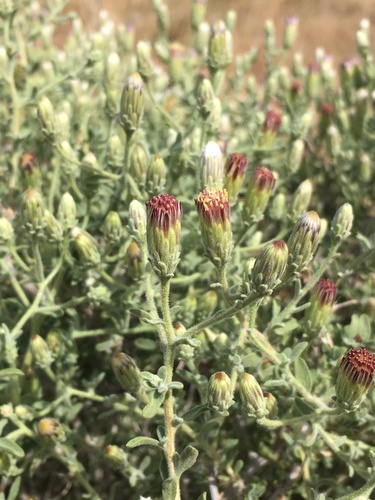
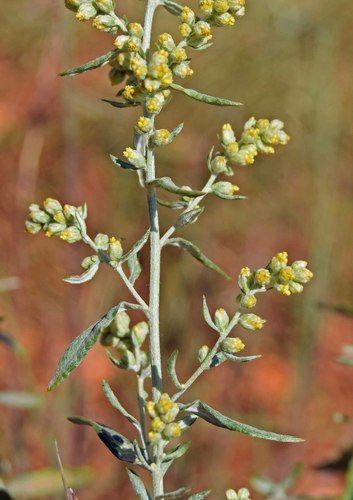
Artemisia ludoviciana Nutt. is a rhizomatous perennial plant that grows 0.3 to 1.0 meters (0.98 to 3.28 feet) tall. Its stems carry linear leaves that can reach up to 11 centimeters in length. Both the stems and foliage are covered in woolly gray or white hairs. The upper end of the stem holds a narrow inflorescence made up of many nodding, or hanging, flower heads. Each small flower head is a cup of hairy phyllaries that surrounds a center of yellowish disc florets, and measures around 0.5 centimeters wide. It produces a minute achene as its fruit, and its blooming period runs from July to October. This species is native to North America, where it is widespread across most of the United States, Canada, and Mexico. Some botanists propose that populations found in eastern United States were introduced from western and central parts of the continent. Habitats where it grows naturally include dry slopes, canyons, open pine woods, and dry prairies. A. ludoviciana is grown as an ornamental plant. Because it is rhizomatous, it can spread aggressively in some climates and garden settings. It thrives in dry to medium moisture, well-drained soil, and requires full sun to grow. Popular cultivated varieties of the plant include 'Valerie Finnis' and 'Silver Queen'; both are hardy to USDA zone 4. 'Valerie Finnis' has held the Royal Horticultural Society's Award of Garden Merit since 1993.