About Artemisia herba-alba Asso
Growth Form and Size
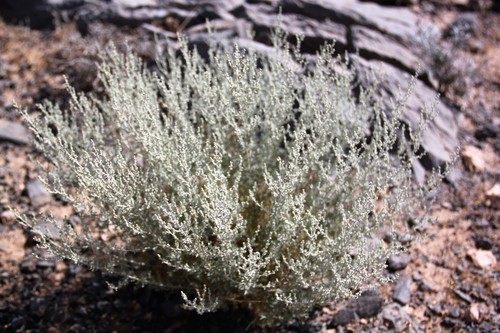
Artemisia herba-alba Asso is a chamaeophyte that grows 20–40 cm (8–16 in) tall.
General Leaf Characteristics
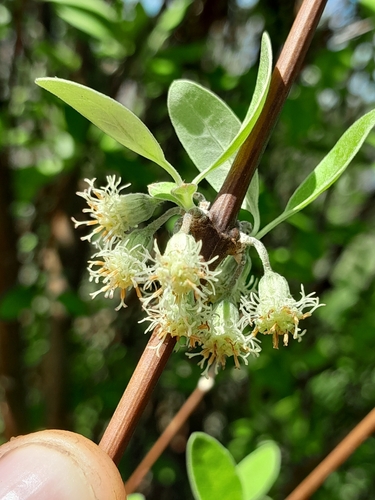
Its leaves are strongly aromatic, covered in fine glandular hairs that reflect sunlight, giving the entire shrub a grayish appearance.
Leaf Variation by Shoot Type
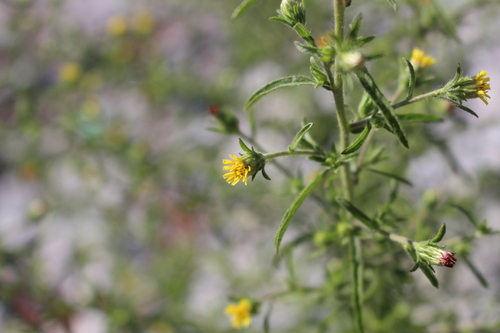
Leaves on sterile shoots are gray, petiolate, and ovate to orbicular in outline, while the smaller leaves found on flowering stems are much more abundant in winter.
Flowering Head Morphology
The flowering heads are sessile, oblong, and taper at their base.
Flowering Period
This species flowers from September to December.
Flowering Head Composition
Each flowering head has a naked receptacle and holds 2–5 yellowish hermaphrodite flowers.
Fodder Use
Artemisia herba-alba serves as good fodder for grazing animals, primarily sheep, and also for cattle in Algerian steppes.
General Medicinal Properties
As a species of sagebrush, it is widely used in herbal medicine for its antiseptic, vermifuge, and antispasmodic properties.
Bedouin Traditional Use
Among Bedouins in the Negev desert, it is a traditional remedy for enteritis and various intestinal disturbances.
Essential Oil Pharmacological Effects
Laboratory assays have found that the plant's essential oil has antibacterial activity, produces an antispasmodic effect in rabbits, and shows a cytotoxic effect on cancer cells.
Iraqi Folk Use for Diabetes
In Iraqi folk medicine, teas made from Artemisia herba-alba are used to treat diabetes mellitus.
Hypoglycemic Effect Studies
An aqueous extract prepared from the plant's aerial parts has demonstrated a hypoglycemic effect in alloxan-induced diabetic rabbits and mice.