About Artemisia afra Jacq.
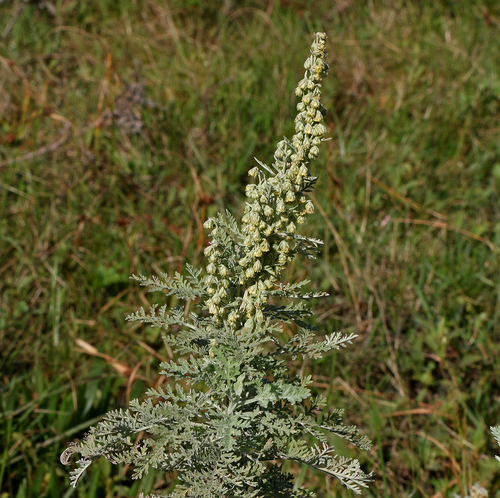
Artemisia afra Jacq. grows in clumps, with ridged woody stems that reach 0.5 to 2 meters in height. Its leaves are dark green with a soft texture, shaped similarly to fern leaves. The undersides of the leaves are lighter green and covered in white bristles. Smaller side branches grow upward from the main stem. This species blooms in late summer, producing abundant clusters of butter-colored flowers; each flower is approximately 3 to 5 millimeters in diameter. When any part of the plant is bruised, it releases a pungent, sweet scent. Artemisia afra grows across a broad geographic range that includes Kenya, Tanzania, Uganda, Ethiopia, Zimbabwe, and Namibia. It grows primarily in damp areas such as stream banks, and also in transitional zones between different ecosystems. It occurs at elevations between 20 and 2440 meters, and can be found on slopes, stream sides, and forest margins. It is most commonly found during the months of March, April, and May. Based on occurrence data, 48.0% of recorded finds of this species are from South Africa, 14.4% from Tanzania, and 9.6% from Kenya, and 88.4% of recorded specimens are preserved. In the study area nature reserve, Artemisia afra is considered an invasive species that encroaches and spreads quickly. It was found in around 15% of the reserve, with 71% of recorded plants being adults and 29% being juveniles. This plant has been used for a wide range of purposes. It has been used as a blood purifier, to make bitter tea, and has been applied to treat a broad variety of ailments. People place fresh leaves of Artemisia afra in the nostrils to clear blocked nasal passages. Heated leaves are bound over sprains to reduce discomfort. The plant is ground into powder to deter ants, and it is also used as a repellent to keep away moths, other insects, and fleas. It has historically been used to treat malaria, a use that lacks supporting scientific evidence; one study found no compounds of interest for malaria treatment in this species, including artemisinin. Leaves of Artemisia afra have been placed inside socks to help manage sweaty feet. To prepare an infusion, one quarter cup of fresh Artemisia afra leaves is placed in a cup of boiling water, left to cool for 10 minutes, strained, and then mixed with honey. A sesquiterpene lactone isolated from Artemisia afra has shown cytotoxic activity. The species has high genetic variation, particularly in its chemical composition.