About Artemisia abrotanum L.
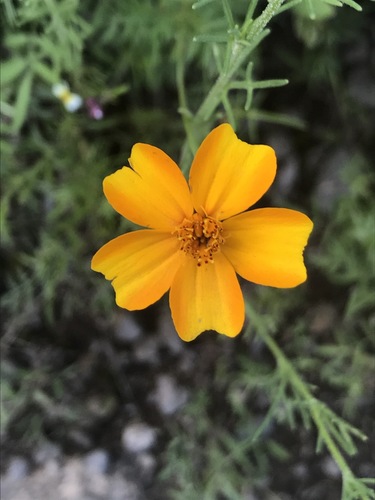
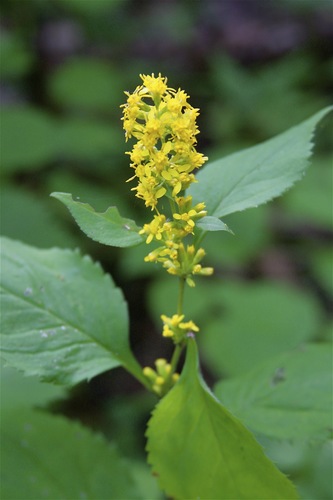
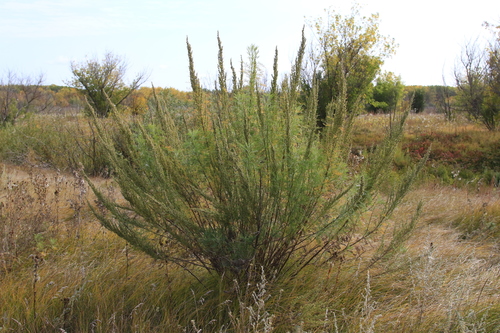
Artemisia abrotanum L. is a shrub-like herbaceous perennial in the Asteraceae (daisy) family. It grows as a bushy, clumped plant with upright branches bearing greenish-gray leaves. Leaves are typically 1 to 3 inches long and normally less than 1 inch wide. At maturity, the plant reaches 3 to 4 feet tall and 2 to 3 feet wide. Its flowers, which are cup-shaped, less than 1 inch across, and can be white or yellow, bloom in summer and fall. The plant is well known for its camphor-like scent; when touched, it sometimes releases an additional aroma of lemon or tangerine. It contains abrotanin, an alkaloid that fights bacteria. This species is found mainly in the Baltic states, but has also been recorded across Eurasia, North America, and Africa. In North America, it has become a naturalized weed in disturbed areas. It grows best in hot, dry climates, and does not thrive in humid weather. In 2012, the European Food Safety Authority reported that all aerial parts of Artemisia abrotanum contain substances toxic to humans, specifically bicyclic monoterpenes and phenylpropanoids in its essential oil. Poison severity is generally low, but consuming large quantities can be very toxic to humans. All parts of the plant (bark, flowers, fruits, leaves, roots, seeds, and stems) are poisonous. As early as the sixteenth century, Swedish and Danish medicinal texts recorded this plant as a treatment for both people and animals. A yellow dye can be extracted from its branches for use with wool. Its dried leaves are used to repel moths from clothing; the strong, sharp scent that repels moths and other insects comes from volatile oils in the leaves. Historically, it was customary to place sprigs of this herb among clothes or hang them in closets, which gave rise to its French name "garderobe" (meaning "clothes-preserver"). Judges carried posies of southernwood and rue to protect themselves from contagious diseases carried by prisoners, and some church-goers used the herb's sharp scent to stay awake during long sermons. In the traditional medicine of East and North Bosnia and Herzegovina, aerial parts of Artemisia abrotanum are used to treat jaundice. Medieval texts note it was used to treat sleep talking and female diseases. Aqueous extracts of southernwood have demonstrated benefits for all layers of the skin. Two human trials tested these skin benefits: one focused on lower leg dryness, and the other on multiple facial skin concerns. In the first trial, participants applied extract to one leg and a placebo to the other twice daily for two weeks. Researchers measured skin moisturization via Skicon and transepidermal water loss (TEWL), and found a significant decrease in TEWL for legs treated with the extract compared to placebo-treated legs. In the second trial, participants with coarse crow's feet wrinkles, upper cheek wrinkling, and moderate pigmentation applied extract to one side of the face and placebo to the other. Compared to placebo, southernwood facial treatment improved fine lines, mottled pigmentation, and skin radiance, and produced significant improvements in overall facial photodamage. A nasal spray containing Artemisia abrotanum phytoconstituents 1,8-cineole, linalool, and davonone has been tested for treating allergic rhinitis. After the spray was administered to twelve patients with allergic rhinitis, symptoms including nasal congestion, sneezing, and rhinorrhea decreased within 10 minutes and improvements lasted for several hours. All participants experienced a temporary stinging sensation in the nasal area after use, but the sensation only lasted a few seconds and did not interfere with the spray's effects. This plant, also called southernwood, appears in cultural contexts: it is referenced in Edward Thomas' poem "Old Man or Lad's Love", mentioned in the Chinese Book of Rites in connection with sacrifices, and was used in fragrant bouquets by churchgoing women in Sweden. For cultivation, Artemisia abrotanum grows in acidic, well-drained soil; it prefers loamy, sandy, or clay soil to reach full size. It requires full sun exposure in a sheltered location protected from strong winds, and is susceptible to root rot.