About Artabotrys hexapetalus (L.f.) Bhandari
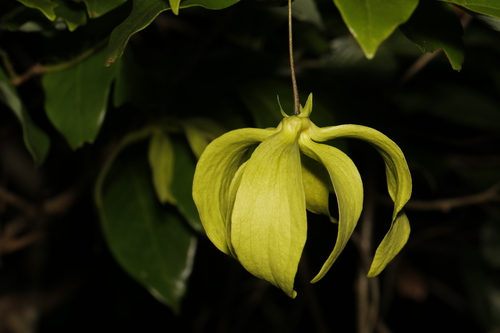
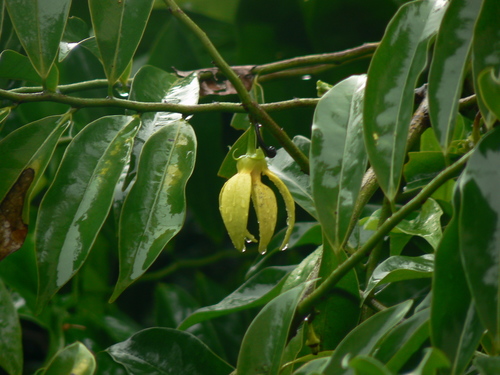
Artabotrys hexapetalus, commonly known as climbing ylang-ylang, is a woody plant native to regions ranging from India through Burma (Myanmar), southern China, Taiwan, and the Philippines. It also goes by the English common names ylang-ylang vine and tail grape, and has different names in other languages. When young, it grows as a shrub, and becomes a climbing plant once it reaches about 2 meters in height. Mature plants are large woody climbers or half-scandent shrubs, making them unsuitable for small gardens due to their large size; pruning is required to maintain a manageable shape. Its flowers are famous for their distinct exotic fragrance. New flowers start out greenish, then turn yellow as they age. Ripe flowers are greenish-yellow, grow axillary, either solitary or in clusters of two or three, and have a strong scent that resembles ripe jackfruit — this similarity gives the plant its Bengali name 'Kanthali champa', meaning jackfruit-champa. The yellow flowers are very fragrant, long-lasting, and have a pleasant, fruity smell. It flowers almost year-round, with heavier blooming during summer and the rainy season. Propagation of this species is done from seeds or layering.