About Arrhenatherum elatius (L.) P.Beauv. ex J.Presl & C.Presl
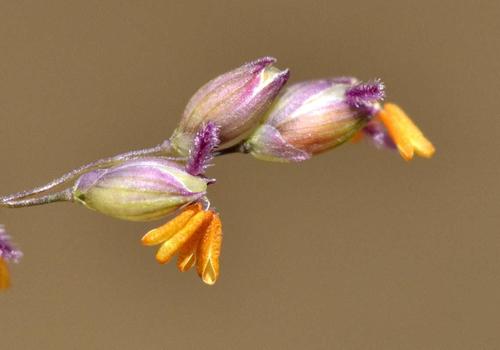
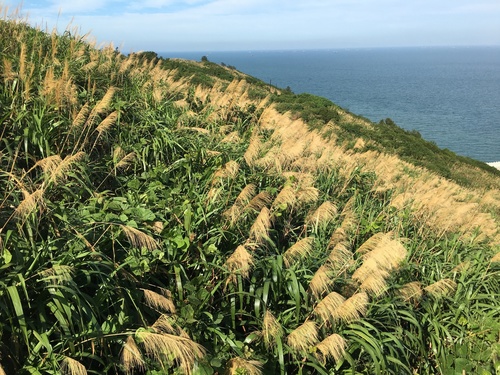
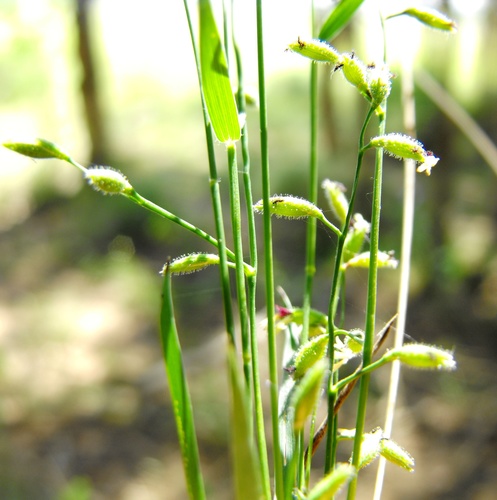
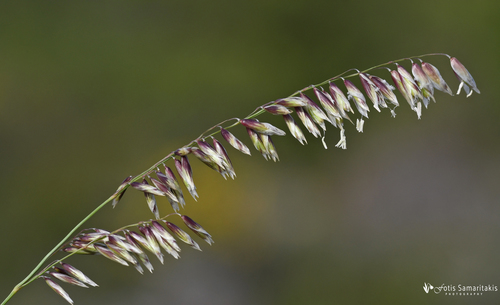
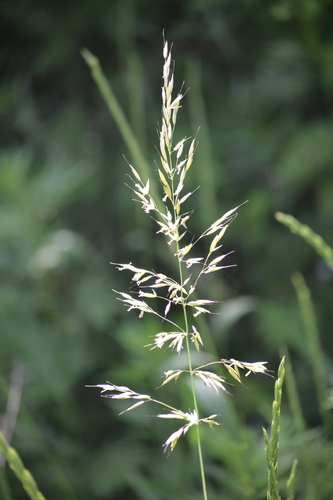
Arrhenatherum elatius (L.) P.Beauv. ex J.Presl & C.Presl is a coarse grass that grows up to 1.8 m (6 ft) tall. Its leaves are 4–10 mm wide, bright green, broad, slightly hairy, and rough. Its ligule is 1–3 mm long with a smooth edge. Its panicle can reach up to 30 cm (12 in) in length; the clustered spikelets bear projecting, angled awns up to 17 mm (1 in) long, and are either green or purplish. The spikelets themselves are oblong or gaping, and panicles often persist through the winter. This species flowers from June to September, and has yellow roots. Four subspecies are currently accepted in Kew's Plants of the World. The first is Arrhenatherum elatius subsp. elatius, the nominal (typical) subspecies. The second is Arrhenatherum elatius subsp. bulbosum (synonym: Arrhenatherum tuberosum), commonly called onion couch or tuber oat-grass, which is distinguished by corms at the stem base that it uses for propagation; this subspecies grows in vegetated shingle and arable land. The third is Arrhenatherum elatius subsp. cypricola, an endemic species native to Cyprus. The fourth is Arrhenatherum elatius subsp. sardoum, found in the western Mediterranean region. Arrhenatherum elatius is a principal species in two UK National Vegetation Classification habitat communities: the very widespread MG1 (Arrhenatherum elatius grassland), and the much rarer MG2 (Arrhenatherum elatius - Filipendula ulmaria tall-herb grassland). It can be found growing alongside species such as Dactylis glomerata (also called cock's-foot or orchard grass) and Filipendula ulmaria (also called meadow-sweet). It grows on road verges, along hedges, and along riverbanks. It is able to colonise and stabilise limestone scree, bare calcareous cliffs, maritime shingle, and coastal dunes.