About Aronia melanocarpa (Michx.) Elliott
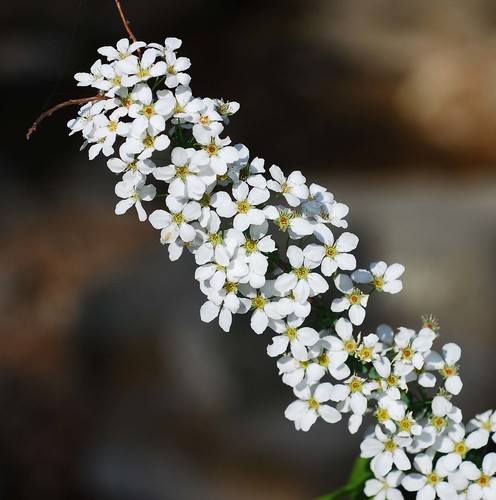
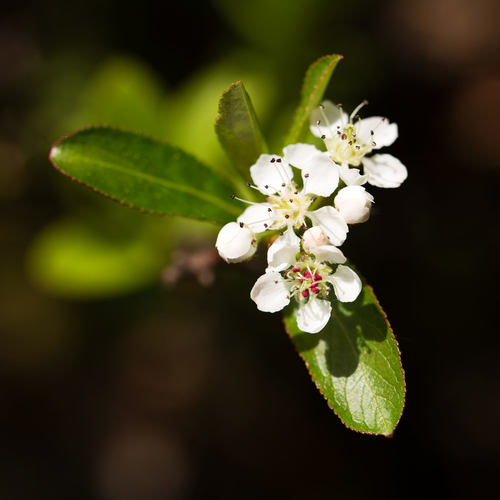
Aronia melanocarpa, commonly known as black chokeberry, is a species of flowering shrub in the rose family. It is native to eastern North America, where its natural range extends from Canada south to the central United States: it reaches from Newfoundland west to Ontario and Minnesota, and as far south as Arkansas, Alabama, and Georgia. This species has been introduced to Europe, where it is grown in cultivation. Black chokeberry is a branching shrub, with glossy dark green leaves that turn red in autumn. It grows well in full sun or partial shade, often reaching a height of 6 feet (1.8 meters) or taller. It forms clumps via new stems that grow up from its root system. Its flowers are white or pink, and emerge in late spring. After flowering, it produces black fruits that ripen in September. This plant is relatively easy to clone from cuttings and root, with summer being the best time to take cuttings. Some species of birds eat its berries. Raw fruits of black chokeberry have an astringent taste, but their flavor improves when used in recipes with added sugar.