About Arnoglossum plantagineum Raf.
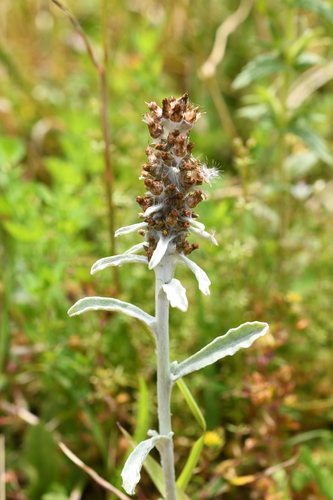
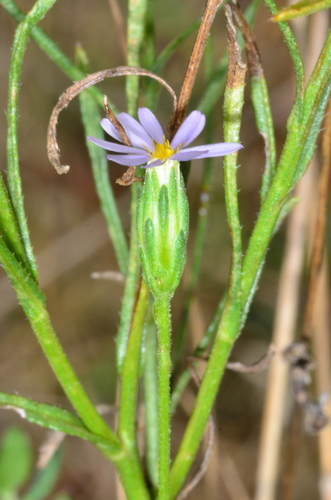
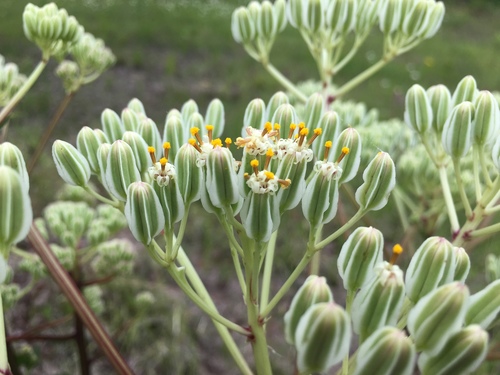
Arnoglossum plantagineum Raf. is a large herbaceous perennial that grows up to 100 cm (40 inches) tall, and spreads weakly via underground rhizomes. Non-flowering individuals produce ovate to oval-shaped leaves up to 17 cm wide, with long petioles and five to seven nearly parallel veins. Flowering individuals have erect, unbranched stems that are angled, grooved, and hairless. Leaves decrease in size moving up the stem; higher leaf blades are more broadly egg-shaped, have coarser toothed margins, and are attached with shorter stalks. The flowerheads are white or greenish, and typically hold five flowers each. These flowerheads are grouped into a branched, flat-topped inflorescence. The flower involucre typically has five phyllaries arranged in a single row. Ripe seeds, called cypselae, are dark brown, fusiform or clavate in shape, 4–5 mm long, and have 12 to 15 ribs. The seed pappi measure (6–)7–8(–9) mm long. The chromosome count for this species is 2n = 54. Arnoglossum plantagineum grows in sunny areas with moist to wet soils, including wet and mesic prairies, fens, and sedge meadows. It has very little tolerance for disturbed habitats, such as areas grazed by cattle, sprayed with herbicides, or hayed repeatedly. In Minnesota, it grows alongside other declining plant species including Asclepias sulliavantii and Parthenium integrfolium. This species is native to the Central United States, ranging across the Great Lakes, Mississippi Valley, and southeastern Great Plains, from Texas east to Alabama and north to Minnesota and Michigan. Additional native populations are found in the Canadian province of Ontario. In the U.S. states of Minnesota and Wisconsin, this species (commonly called tuberous Indian-plantain) is listed as a threatened species, while the state of Tennessee lists it as a species of special concern. In Minnesota, the species was relatively common in the southeastern part of the state until recent times, when most of its native habitat was converted to farmland. Today it only occurs in isolated remnant colonies along old railroad right-of-ways. Because this species naturally occurs in low densities, these isolated populations may not be able to persist.