About Arnica montana L.
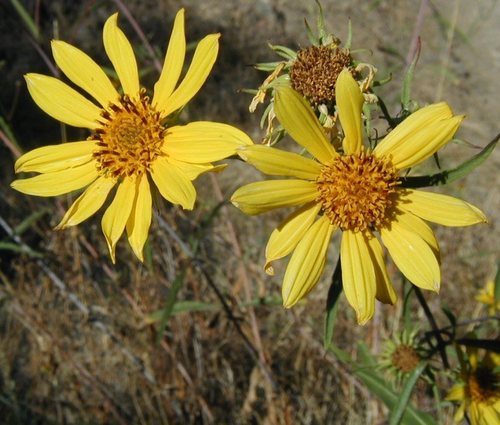
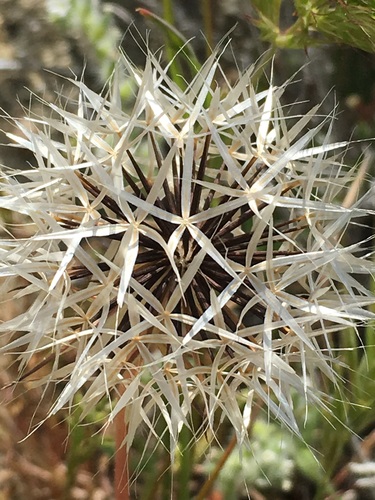
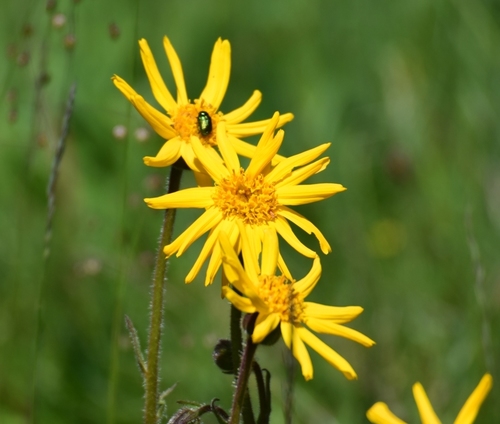
Arnica montana L. is an aromatic, fragrant herbaceous perennial flowering plant, growing 18 to 60 cm (7.1 to 23.6 in) tall. Its bright green basal leaves are ovate with rounded tips, lie flat against the ground, are slightly downy on their upper surface, veined, and grow clustered in rosettes. In contrast, its smaller, opposite spear-shaped upper leaves are an exception within the Asteraceae family. This species has a chromosome number of 2n=38. In Central Europe, its flowering season runs from May to August. Its flower heads reach around 5.1 cm (2 in) across, with orange-yellow disc florets at the center bordered externally by 10 to 15 yellow ray florets. Its achenes have a single-piece rough pappus that opens in dry conditions. Arnica montana is a hemicryptophyte, an adaptation that helps it survive extreme winter conditions in its native habitat. It also grows rhizomes that follow a two-year growth cycle: new rosette growth develops at the front of the rhizome, while the older tail portion slowly dies back. Arnica montana is widespread across most of Europe. It does not occur naturally on the Celtic Isles, or on the Italian and Balkan peninsulas, and is considered extinct in Hungary and Lithuania. This species grows in nutrient-poor siliceous meadows or clay soils, and is most commonly found on alpine meadows up to nearly 3,000 m (9,800 ft) in elevation. It can also grow on nutrient-poor moors and heaths in upland regions. It will not grow on lime soil, making it an extremely reliable bioindicator for nutrient-poor, acidic soils. Overall it is a rare species, but can be locally abundant. It is becoming increasingly rare, particularly in the northern part of its distribution, primarily due to more intensive agricultural practices and commercial wild foraging. Despite this, it is cultivated on a large scale in Estonia. The United States Food and Drug Administration has classified Arnica montana as an unsafe herb due to its toxicity. It should not be taken orally, nor applied to broken skin where it can be absorbed into the body. Arnica irritates mucous membranes, and can cause stomach pain, diarrhea, and vomiting. Contact with the plant may cause skin irritation, and can lead to contact dermatitis when applied to skin. The plant contains the toxin helenalin, which is poisonous if large amounts of the plant are eaten, or even small amounts of concentrated Arnica are used. Consumption of Arnica montana can cause severe gastroenteritis, internal bleeding of the digestive tract, elevated liver enzymes indicating liver inflammation, nervousness, accelerated heart rate, muscular weakness, and death if a sufficient quantity is ingested. An extract of Arnica montana tested in the Ames test was found to be mutagenic. Arnica montana is propagated from seed, and typically around 20% of seeds fail to germinate. For large-scale cultivation, it is recommended that plants are first started in a nursery, then transplanted out into the field. Seeds sprout within 14 to 20 days, though the germination rate depends heavily on seed quality. A planting density of 20 plants per square meter allows maximum yield density by the second flowering season. Since Arnica montana has strict requirements for soil quality, soil analysis should be completed before any fertilizer is applied. Flowers are harvested when they are fully developed, then dried with their bracts and receptacles removed. Roots can be harvested in autumn, washed thoroughly, then dried. It is sometimes grown in home herb gardens. Arnica montana has a history of use as a herbal medicine. When used as a 50% concentration topical gel, Arnica montana was found to have the same effectiveness for treating hand osteoarthritis symptoms as 5% ibuprofen gel, though it may carry worse side effects. A 2014 review found that Arnica montana is ineffective at concentrations of 10% or less for treating pain, swelling, and bruises. A 1998 review of homeopathic Arnica montana — all such preparations are so dilute that they contain no actual plant material — found it is no more effective than a placebo. A 2021 study found the preparation to be more effective than placebo at preventing excessive hematoma, with effectiveness comparable to anti-inflammatory substances.