About Arnica chamissonis Less.
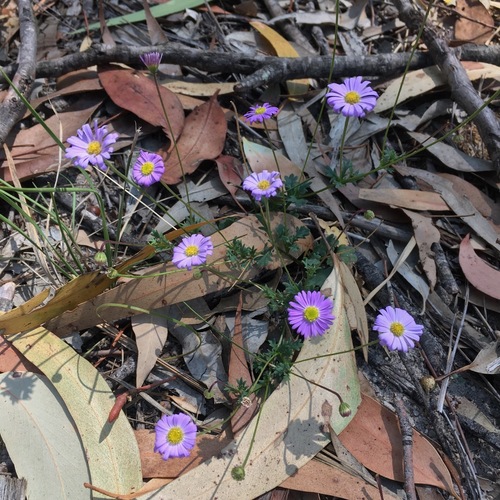
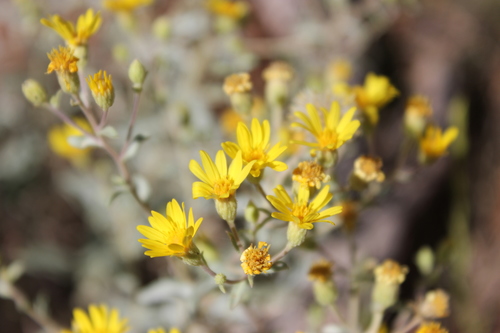
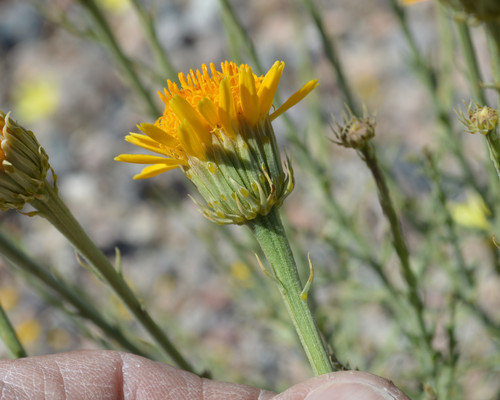
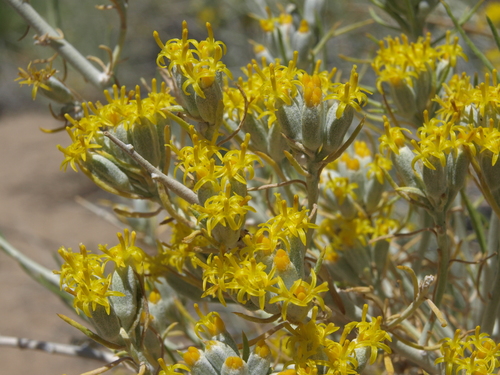
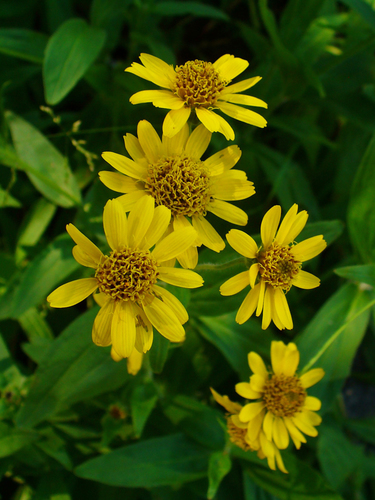
Arnica chamissonis Less. is a perennial plant species named for German poet and botanist Adelbert von Chamisso (1781–1838). In terms of morphology, it produces yellow flowers and medium-textured green foliage. Its leaves are arranged in 4 to 10 pairs, and it forms brown seeds. It has rhizomatous growth, meaning it grows from an underground stem that bears small, fiber-like adventitious roots, and grows at a moderate rate. It reaches a mature height of roughly 2.5 feet, or 76 cm. Its active growth period occurs during spring and summer, and it blooms throughout the summer. It is native to western North America, including Alaska, most of Canada, and the Canadian territories of Yukon and the Northwest Territories. This species can tolerate a minimum temperature of −33 °F, which equals −36 °C. It adapts to both coarse and medium textured soils with a pH between 6.0 and 7.2. It requires high moisture, so it needs annual precipitation between 14 and 24 inches (36 to 61 cm), and prefers full sun with an average soil temperature of 65 to 75 °F (18 to 24 °C). It typically grows in moist meadows and conifer forests, most often in montane to subalpine zones from 0 to 3,500 metres (0 to 11,483 ft) elevation. Its seeds are widely available, so it can be grown in home gardens, and can also be grown in containers from either seeds or sprigs. There are approximately 400,000 seeds per pound, with medium seedling vigor (the expected seedling survival percentage of the plant compared to other species with the same growth habit) and a moderate rate of vegetative spread (how quickly the plant can spread through a given area). Like Arnica montana, Arnica chamissonis contains the toxin helenalin.