About Armoracia rusticana P.Gaertn., B.Mey. & Scherb.
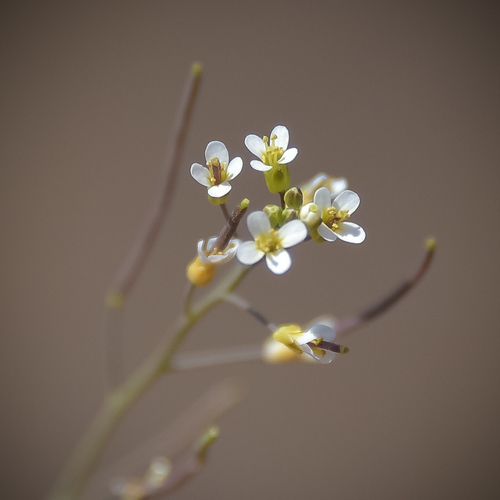
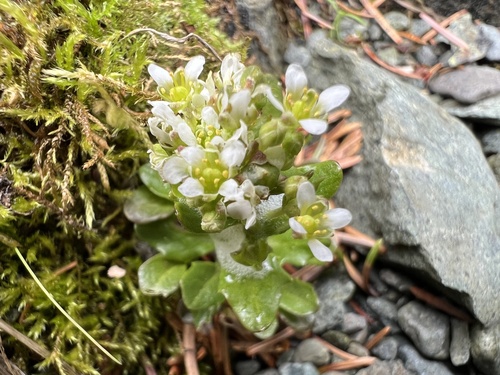
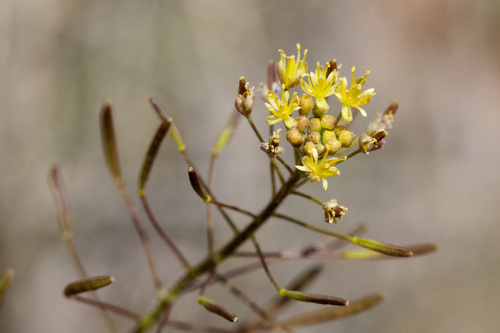
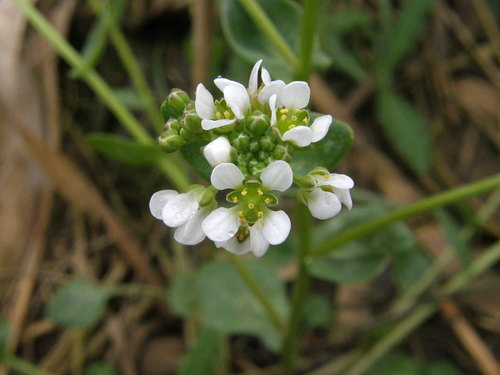
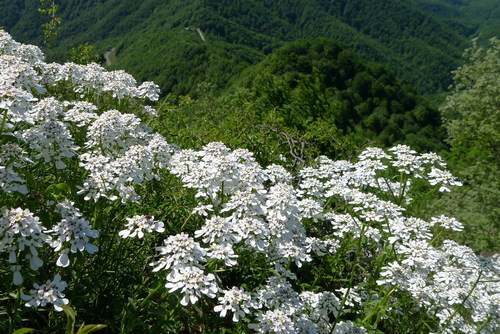
Armoracia rusticana P.Gaertn., B.Mey. & Scherb., commonly called horseradish, can grow up to 1.5 meters (5 feet) tall. It produces hairless, bright green, unlobed leaves that reach up to 1 m (3 ft 3 in) long, which are often mistaken for leaves of docks (genus Rumex). Early in the growing season, its leaves are distinctly asymmetric and spiky, before the plant develops its mature, typical flat and broad leaves. The plant is cultivated mainly for its large, white, tapered root. Its scented white four-petaled flowers grow in dense panicles. Well-established horseradish plants can form large, extensive patches and become invasive if not carefully managed. Intact horseradish root has almost no aroma. When the root is cut or grated, enzymes from the plant's cells break down sinigrin, a glucosinolate, to produce allyl isothiocyanate, also called mustard oil. This compound irritates the mucous membranes of the sinuses and eyes. Once exposed to air or heat, horseradish loses its pungency, darkens in color, and develops a bitter flavor. Horseradish is a perennial plant in hardiness zones 2 through 9, and can be grown as an annual in other zones, though it does not grow as successfully as it does in zones that have both a long growing season and winter temperatures cold enough to let the plant go dormant. After the first autumn frost kills the leaves, the root is dug up and divided. The main root is harvested, and one or more large offshoots from the main root are replanted to grow next year's crop. If horseradish is left undisturbed in a garden, it spreads through underground shoots and can become invasive. Older roots left in the ground become woody, and are no longer useful for cooking, although older plants can be dug and re-divided to start new plants. The pungent taste that horseradish is known for comes from the compound allyl isothiocyanate. When horseradish flesh is crushed, the enzyme myrosinase is released and acts on the glucosinolates sinigrin and gluconasturtiin, which are precursors to allyl isothiocyanate. For the horseradish plant, allyl isothiocyanate acts as a natural defense against herbivores. Because allyl isothiocyanate harms the plant itself, the compound is stored in the harmless form of glucosinolate, kept separate from the enzyme myrosinase. When an animal chews the plant, allyl isothiocyanate is released, which repels the animal. Allyl isothiocyanate is an unstable compound, and breaks down over the course of several days at 37 °C (99 °F). Because of this instability, commercially prepared horseradish sauces do not have the same strong pungency as freshly crushed roots. Cooks often use the terms "horseradish" or "prepared horseradish" to refer to mashed or grated horseradish root mixed with vinegar. Prepared horseradish ranges in color from white to creamy beige. It can be stored for up to 3 months under refrigeration, but will eventually darken, which indicates reduced flavor. Young horseradish leaves are edible raw or cooked, and have a similar flavor to the root, though the flavor is less pronounced. During Passover, many Ashkenazi Jews use grated horseradish as an option for Maror, the bitter herbs served at the Passover Seder. Horseradish peroxidase (HRP), an enzyme found in horseradish, is widely used in molecular biology and biochemistry, primarily because it can amplify weak signals and improve the detectability of target molecules. HRP has been used for decades in research to visualize samples under microscopy and to non-quantitatively assess the permeability of capillaries, especially those in the brain.