About Aristida stricta Michx.
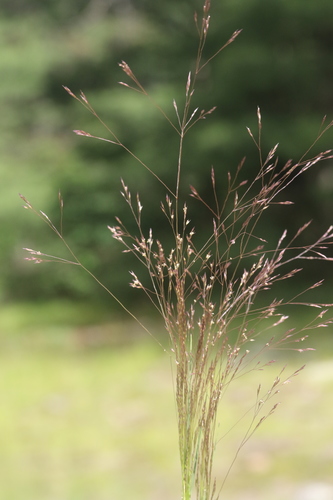
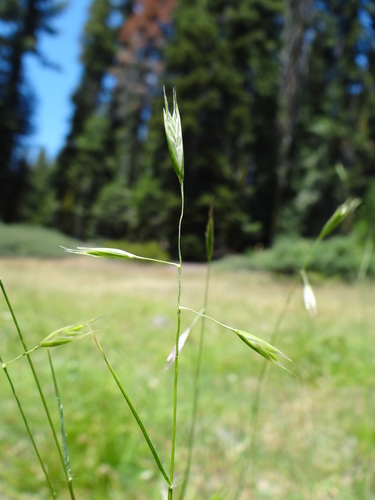
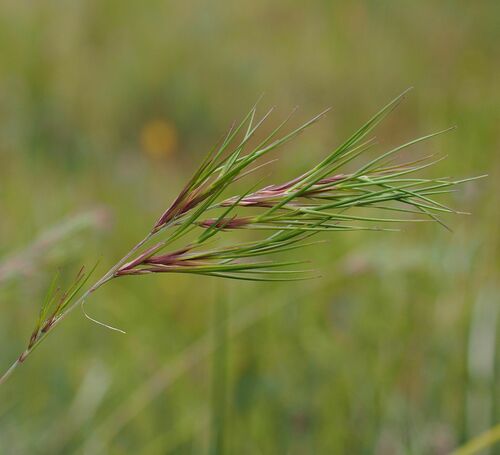
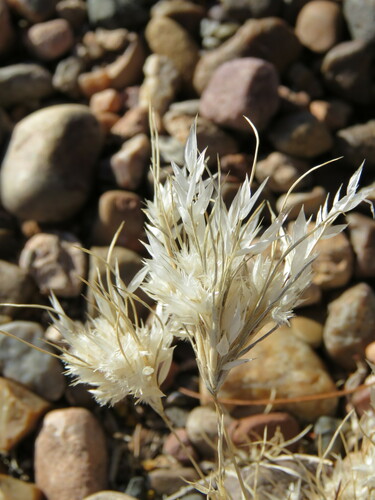
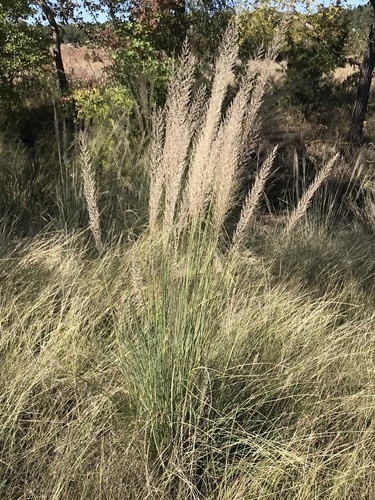
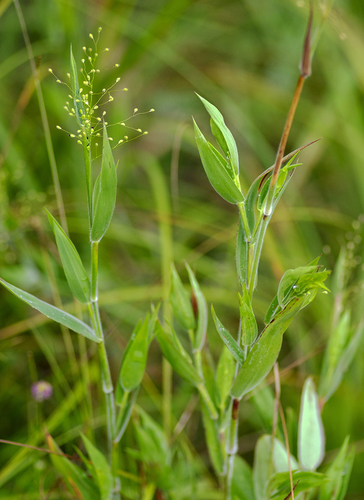
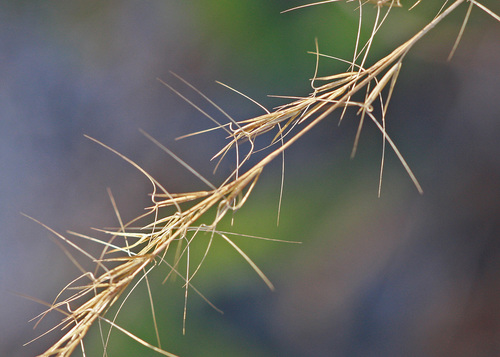
Aristida stricta Michx., commonly called wiregrass or pineland three-awn grass, is a warm-season grass native to North America. It dominates the understory vegetation of sandhill and flatwoods coastal plain ecosystems in the Carolinas of the Southeastern United States. Its distinct appearance features villous bristly indument on both sides of its midrib and on the back of its involute leaf blade. While individual sizes vary, mature plants can reach 15 centimeters wide at the base. Leaves are roughly 0.5 meters long, with two to three leaves growing per tiller. Its seeds measure approximately 4.5 millimeters long by 0.4 millimeters wide, and are translucent brown in color. This species is most commonly found in longleaf pine savannas. It is a fast-growing grass that regenerates rapidly after fires; specimens can grow up to 2.5 centimeters per day in the period following a fire. A. stricta relies on regular summer burning to trigger flowering and seed production, with burns carried out in May producing the highest subsequent abundance of reproductive tillers. Additionally, the species plays a foundational role in ecosystem fire dynamics: its foliage helps speed the spread of lightning-started fires across the rest of the habitat. A. stricta shows a negative association with areas that have a history of agricultural use, as well as with general soil disturbance. It has a positive association with higher burn frequency in an ecosystem. Restoration efforts for wiregrass communities propagate A. stricta from seed for outplanting. A study from the Tall Timbers Research Station found that planted plugs of A. stricta can reproduce to dominate a low-density area over the course of decades.