About Aristida contorta F.Muell.
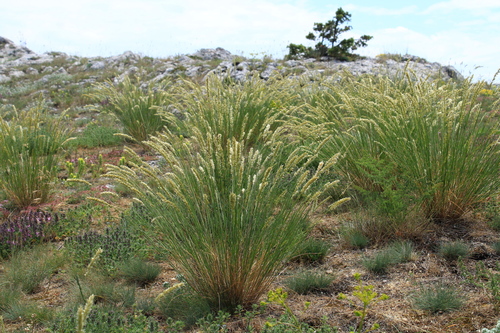
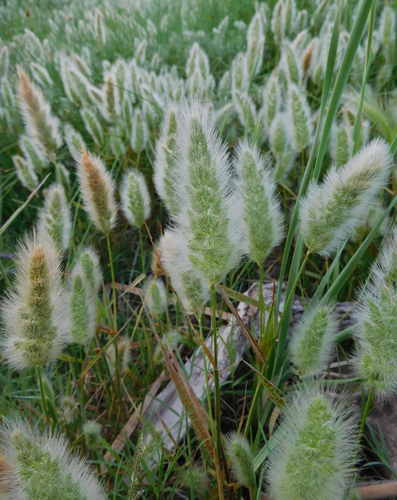
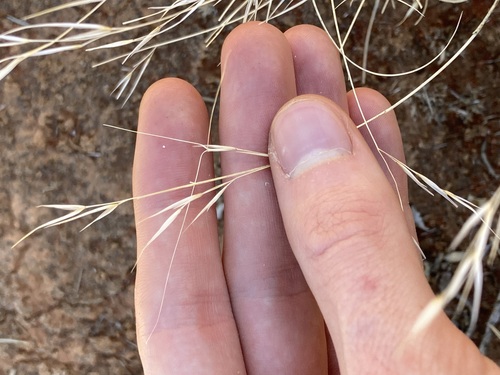
Aristida contorta F.Muell. is an annual or short-lived perennial tufted grass that typically grows 0.12 to 0.44 metres (4.7 inches to 1 foot 5.3 inches) tall. Its culms are either erect or geniculately ascending, and bear two to four nodes. Mid-culm internodes are glabrous, and produce branched lateral branches. Its leaf-sheaths may be smooth or scaberulous, and have either a glabrous or hairy surface. The ligule is made up of a fringe of hairs 0.3 to 0.5 mm (0.012 to 0.020 inches) long. Its leaf-blades are flexuous and filiform, and can be smooth or scaberulous; they measure 3 to 10 cm (1.2 to 3.9 inches) in length and 1 mm (0.039 inches) in width. This species blooms between February and June, and produces brown flowers. Each of its compound inflorescences holds an elliptical panicle that is 9 to 26 cm (3.5 to 10.2 inches) long and 4 to 9 cm (1.6 to 3.5 inches) wide. Spikelets are pedicelled, each containing one flower. The lanceolate spikelets measure 12 to 30 mm (0.47 to 1.18 inches) long. This grass occurs across most of mainland Australia. It can grow in red, white, or yellow sand, red or brown clay, or loamy soils. It is adapted to survive in Australia's most arid areas, and is common in most arid and semi-arid locations. It is often found associated with Eucalyptus and Acacia aneura woodland communities. When this grass becomes dominant, it is an indicator of poor pasture. It is a natural component of grassland pastures, and can be grazed by cattle and sheep alongside other, more palatable species, but it is mostly considered undesirable. Because it has low palatability, its proportion in grazing areas tends to increase over time. While it has low forage value, it has some moisture-retaining capacity and can grow quickly.