About Argiope vietnamensis Ono, 2010
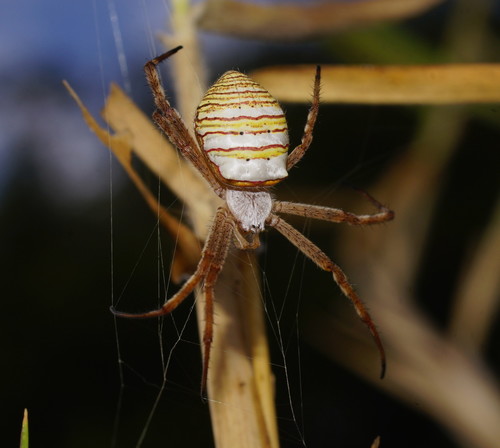
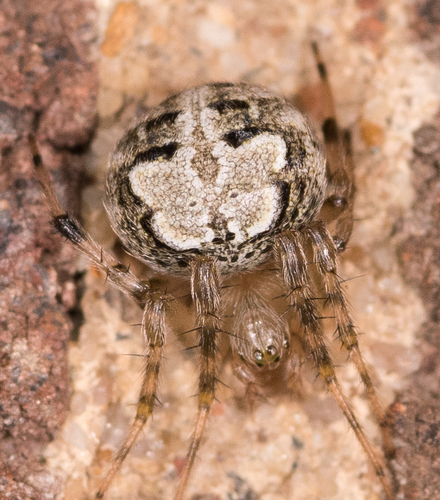
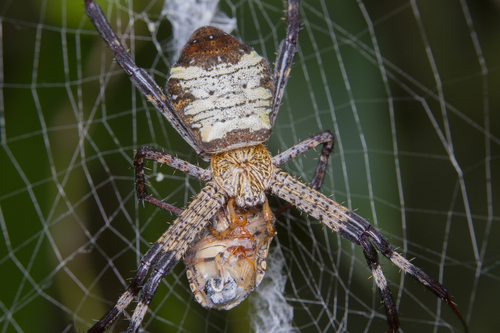
Argiope vietnamensis is a relatively large orb-weaver spider. Females are considerably larger than males: females have a total body length of 22.5 mm, while males reach 5.2 mm. The female has a distinctive trapezoidal abdomen with a pair of small bumps at its front sides. The upper surface of the female abdomen does not have the dark bands typically seen in related species; instead, its color transitions from white at the front to light yellow in the middle, and brown at the rear. The underside of the abdomen has striking black and white bands and spots, with three pairs of white spots set against a black background. In living specimens, the carapace is silver-white, and the abdomen is white with black markings. The much smaller male has a shield-shaped brown abdomen, which is paler at the front and darker toward the rear. The male's carapace is yellow-brown and covered with short, thin hairs. This species can be distinguished from similar Asian species such as A. minuta and A. katherina by the smaller depressions in the female's reproductive structures and differences in the shape of related features. Males can be identified by their reproductive organs, specifically the structure of the median apophysis, which is divided into two branches: the inner branch bears a short spur, and the embolus is completely visible when viewed from the side. Argiope vietnamensis has been recorded in China (Guangxi and Guizhou provinces) and Vietnam. In Vietnam, it was originally discovered near Bach Ma National Park in Thừa Thiên Huế Province, at elevations between 400 and 500 meters. Chinese populations have been documented from multiple sites, including Shiwan Dashan (Ten Thousand Mountains) National Forest Park and Maolan National Nature Reserve.