About Argiope ocula Fox, 1938
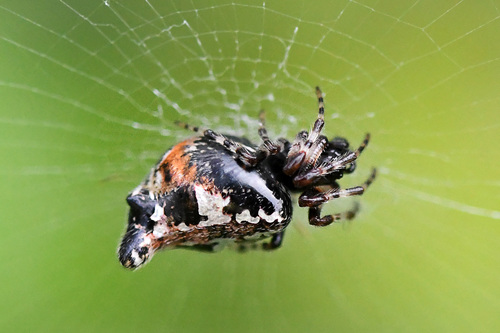
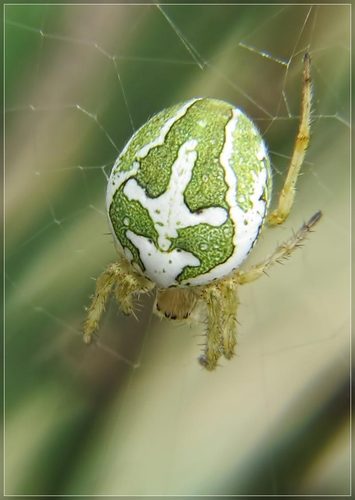
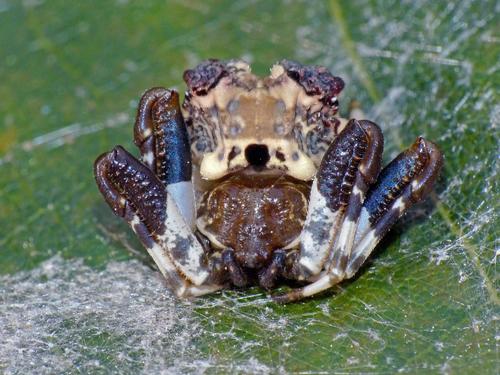
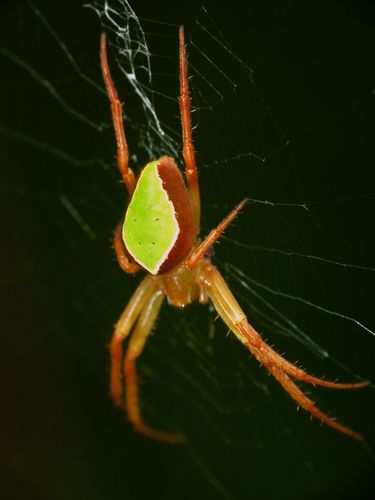
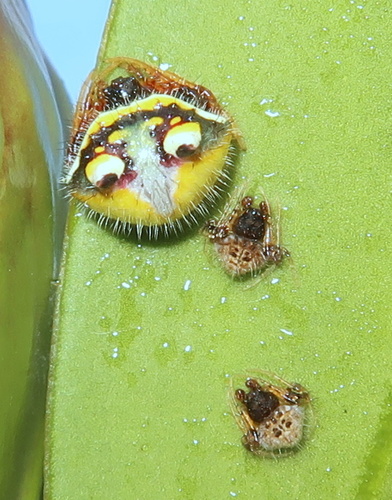
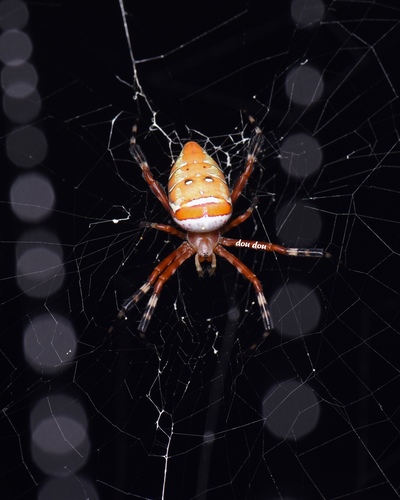
Argiope ocula Fox, 1938 shows strong sexual dimorphism, where females are far larger than males. Females reach roughly 20 mm in body length. Their carapace is brown and covered in white hairs. Their abdomen is characteristically elongated and narrow, with a yellowish-brown dorsal surface that has yellow transverse lines at the front, and distinctive yellow and black crescent-shaped markings on the sides. This elongated abdominal shape and unique color pattern easily separate females of this species from other Argiope species. Males are much smaller, reaching approximately 7 mm in body length. Their carapace is brown and marked with two light-colored longitudinal stripes. Their abdomen is also elongated, with a light brown dorsal surface and three black spots near the posterior end. The elongated abdomen distinguishes males from most other Argiope species, with the exception of Argiope boesenbergi. Males of A. ocula can be told apart from A. boesenbergi by differences in the structure of the median apophysis and embolus of their pedipalps. Argiope ocula is distributed throughout East Asia, with confirmed records from China, Taiwan, and Japan, specifically in southern Kyushu and the Satsunan Islands.