About Argia vivida Hagen, 1865
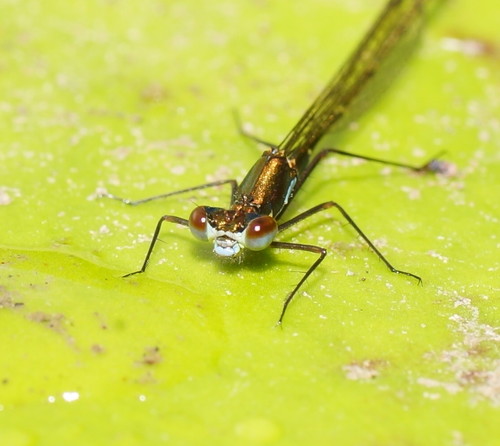
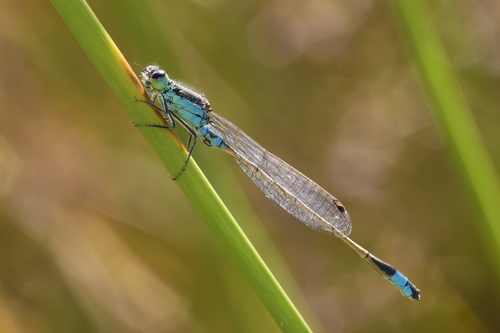
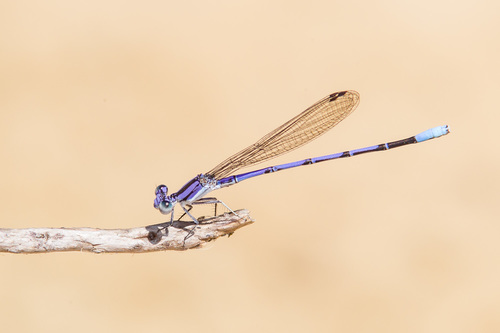
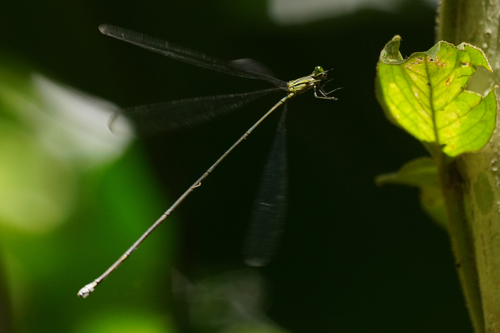
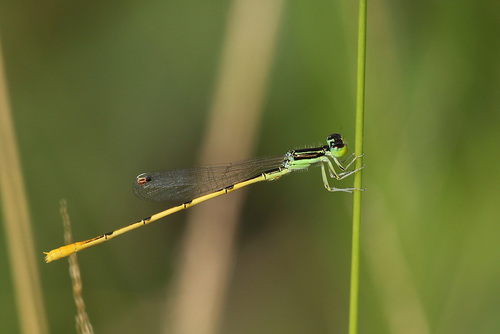
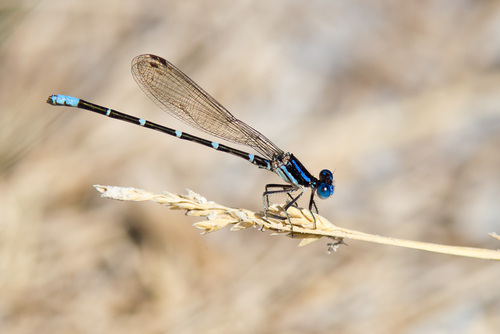
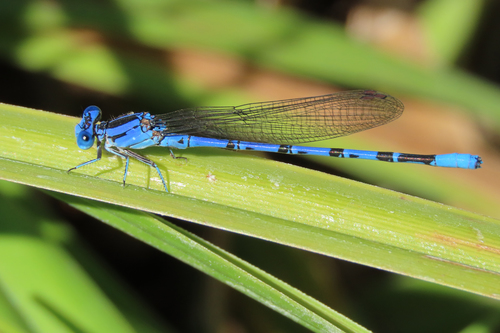
Argia vivida, commonly known as the vivid dancer, is a species of narrow-winged damselfly belonging to the family Coenagrionidae. It is commonly found in springs and forests across North America and Central America. This species is recognized as the official state insect of Nevada. Vivid dancers vary in color; they are most commonly known for their bright blue coloration, but other morphs can be red, brown, or grey, with color varying based on morph type and environmental temperature. Due to their thermoregulation needs, this species can inhabit areas with a wide range of temperatures. Mating takes place in the mornings and afternoons, and females oviposit eggs just below the water surface, laying them on submerged vegetation. Larvae feed on small invertebrate larvae, while adult vivid dancers eat small flying insects. The IUCN Red List classifies the conservation status of Argia vivida as "LC" (least concern), meaning there are no immediate threats to the species' population, and its population is currently stable. This species engages in thermoregulation by occupying habitats that offer different thermal regimes throughout the day. At night, individuals typically settle on forest trees to maintain their body temperature and slow radiant heat loss. During the day, they leave these trees to move into sunspots in thinned forest to bask for warmth. Because of this, the ideal habitat for the vivid dancer is a forest with both dense mature trees and cleared or thinned patches that fit their thermoregulation needs. In fuel-modified forests, Argia vivida still roost in trees at night, but prefer cleared fuel treatment areas over thinned forest sections for basking and foraging. After mating, females require a water temperature of at least 11°C for their eggs to develop, but larvae can survive and overwinter in water temperatures ranging from 0°C to 33°C. In thermal springs, the species' full life cycle takes approximately one year to complete. In cooler springs, the life cycle may extend to 2 to 3 years. Adult emergence occurs between April and October, with timing dependent on local temperature.