About Argentina anserina subsp. egedii (Wormsk.) Á.Löve & Ritchie
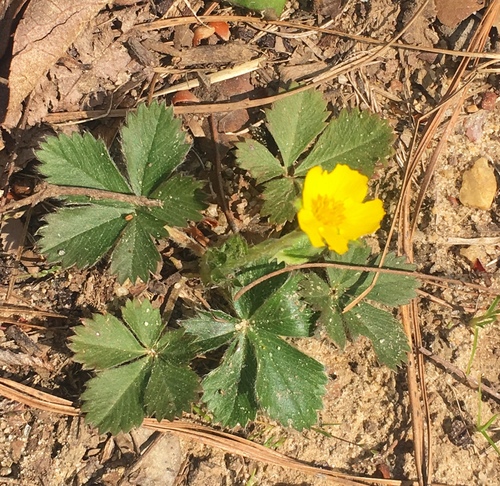
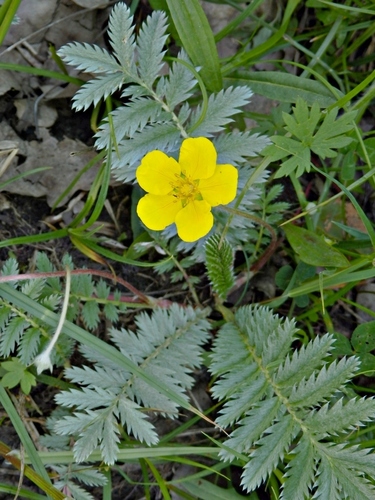
Description: Silverweed (Argentina anserina subsp. egedii) is a low-growing perennial herbaceous plant that reaches up to 20 centimetres (8 in) in height. It produces creeping red stolons that can grow as long as 80 cm (31 in). Its leaves measure 10–20 cm (4–8 in) in length, and are evenly pinnate, divided into saw-toothed leaflets that are 2–5 cm long and 1–2 cm broad, with 6–14 teeth per side. Both sides of the leaflets are covered in silky white hairs, especially on the underside; these hairs also cover the stem and stolons, which gives the leaves the silvery appearance that gives the plant its common name. Each leaf grows from a channeled petiole up to 5 cm long, with a long sheathing base. Flowers are produced singly on stems 5–15 cm long, and measure 1.5–2.5 cm across, with five yellow petals, rarely up to seven. The fruit is a cluster of dry achenes. Distribution and habitat: This silverweed is native across the temperate Northern Hemisphere. It most commonly grows in sandy or gravelly soils, where it can spread rapidly via its abundantly rooting stolons. It typically grows in inland habitats, unlike A. egedii, which is a salt-tolerant plant of coastal salt marshes. Uses: Historically, the plant was placed inside shoes to absorb sweat. It was once thought to be helpful for treating epilepsy, and was believed to be able to ward off witches and evil spirits. Some Native American tribes ate the plant's roots. It has been cultivated as a food crop for its edible roots, which have a similar appearance to parsnips. It can also become a problematic weed in gardens. Travelers to Tibet have recorded that local people use the plant's root as food. Pyotr Kozlov, who traveled through the Kham region in 1900–1901, recorded that Tibetans—who had no vegetables other than turnips—regularly dug up the roots of Argentina anserina, which the local people called djüma. The roots could be easily dried and stored for later use; Kozlov even suggested that Russian peasants could reasonably do the same, especially during years of famine. The expedition of Sarat Chandra Das to Tibet in the late 19th century reported that the plant's root, known locally by names transcribed as toma, doma or droma, was served cooked in butter and sugar during New Year's celebrations in Lhasa, the Tibetan capital.