About Ardisia japonica (Thunb.) Blume
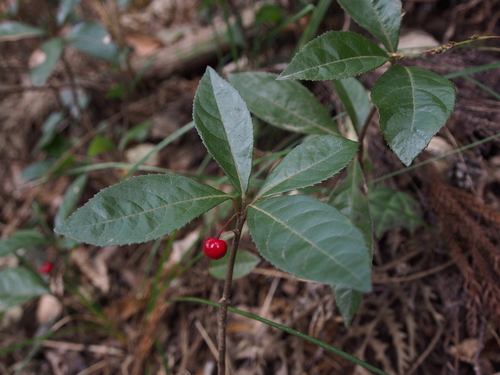
Ardisia japonica (Thunb.) Blume is a low-growing evergreen shrub that spreads very quickly, reaching 20 to 40 centimeters in height. Its leaves grow opposite each other or in whorls; they are ovate in shape, 4 to 7 centimeters long and 1.5 to 4 centimeters broad, with sharply serrated margins and an acute apex. Flowers are 4 to 10 millimeters in diameter, with five (rarely six) white to pale pink petals. They form in racemes in late spring, and this species flowers from August to September. Its fruit is a drupe 5 to 6 millimeters in diameter; it starts out red, maturing to dark purple-black in early winter. This plant grows in dark, damp locations in mixed forests and bamboo forests, at elevations up to 1200 meters above sea level. Several cultivars of this species have been selected for use as ornamental plants. These include 'Hakuokan' and 'Ito Fukurin', which have variegated leaves; 'Hinotsukasa', which has pale cream-colored leaves; and 'Matsu Shima', which has pink stems and variegated leaves. Ardisia japonica is used in koten engei, a traditional form of Japanese horticulture. At least a dozen cultivars of this species, with varying leaf shapes and coloration, are grown for this tradition. In Japanese, the plant is called Jūryō (十両). Because of its red berries and word play associated with its name, it is used for chabana decoration during Japanese New Year, usually paired with winter jasmine. It is used as a medicinal plant in traditional Chinese medicine, where it is called zǐjīn niú (紫金牛) or aidicha (矮地茶), and is counted as one of the 50 Fundamental Herbs. Large doses of this plant used as medicine can be toxic to the kidneys.