About Ardisia crenata Sims
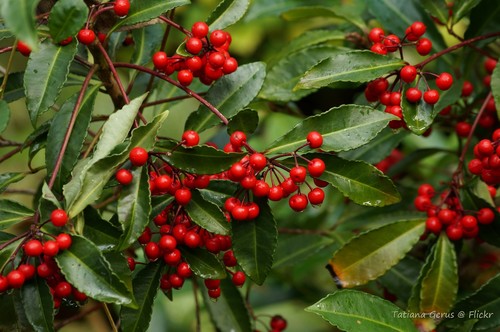
Ardisia crenata Sims, commonly called Christmas berry, is an upright perennial shrub that grows 0.46–1.83 m (1.5–6 feet) tall. It has a densely tufted growth habit and is often multi-trunked. This species prefers moist soil, and its germination can occur across a pH range from 4 to 10. It grows well at temperatures of 25 °C and above, and can reach germination rates as high as 97.79% after 40 days. Its leaves are simple, alternate, grow up to 8 inches long, and are waxy and dark green. The leaves have crenate margins with small calluses within the ridges, acuminate tips, and 3–10 mm long petioles. Each leaf has a central vein with up to 18 pairs of side veins. The flowers are white or pink with yellow anthers, are covered very often by multiple black spots, and grow in axillary clusters. Plants start producing fruit two years after sprouting. Christmas berry produces an abundance of spherical, one-seeded red berries, each about 0.25 inches in diameter, that stay on the plant year-round. Berry clusters often droop below the plant's glossy foliage. Birds and, where present, raccoons eat the berries and excrete the seeds; seeds can also be dispersed by flowing water. While there are unconfirmed suggestions that this plant may be poisonous to livestock, pets, and humans linked to cattle deaths in Florida, this toxicity has not been scientifically confirmed. The leaves of Ardisia crenata are currently under investigation as a treatment to stop asthmatic contractions and spasms. The plant contains a medicinal compound called FR900359 that may potentially treat several diseases, including asthma, hypertension, and uveal melanoma.