About Arctostaphylos catalinae P.V.Wells
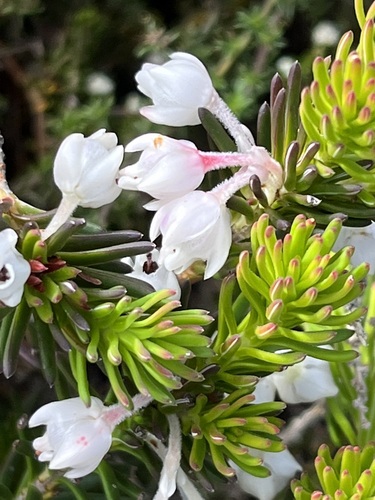
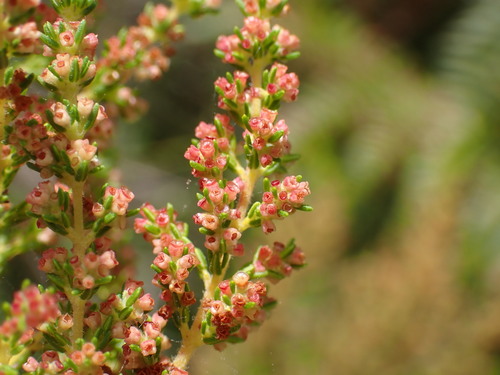
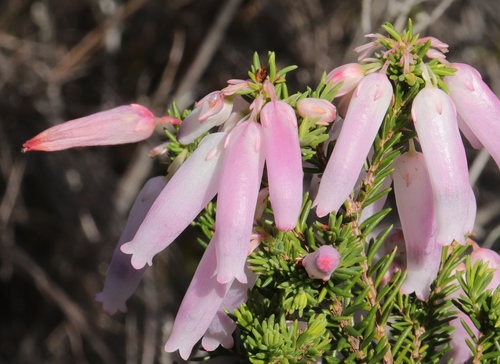
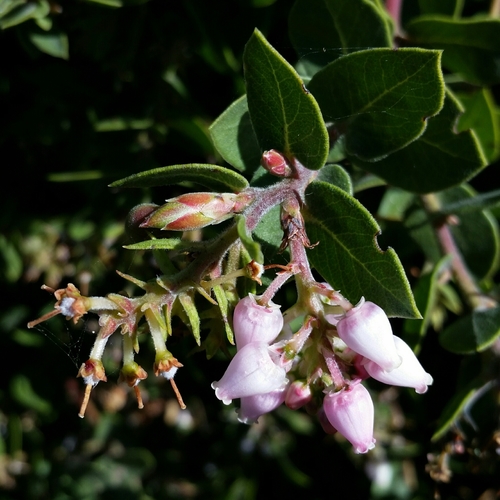
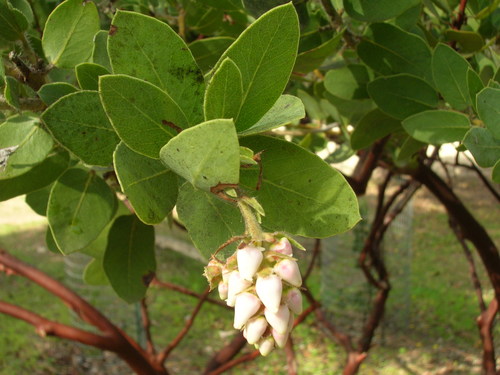
Arctostaphylos catalinae, commonly known as Santa Catalina Island manzanita, is most often a shrub that usually grows over 2 metres (6.6 ft) tall, and it sometimes develops a treelike growth form reaching up to 5 metres (16 ft) in height. The plant is glandular and covered in white bristles, and fine bristles also grow on its leaves. Its dull, light green leaf blades can grow up to 5 centimeters long and 3 centimeters wide. It blooms between February and April, producing white to pink flowers arranged in an open, branching inflorescence with leaflike bracts. Its fruit is a spherical drupe that can reach up to 1.5 centimeters across. This species is endemic to Santa Catalina Island, one of the southern Channel Islands of California. It grows in maritime chaparral habitats on the island's ridges, at elevations between 350 and 460 m (1150 to 1500 ft). Unlike other manzanita species, Arctostaphylos catalinae does not have a basal burl. Because it cannot resprout from a basal burl after fire events, the species relies on seed germination for regeneration. Hummingbirds, which feed on its nectar, and insects are known beneficial organisms associated with this manzanita. The primary threat to Arctostaphylos catalinae was feral goats; after the goats were removed from the island in 2001, the species has been actively recovering. It can be grown as an ornamental garden shrub. For cultivation, it requires full sun, very low water, and it adapts well to a range of different soil conditions.