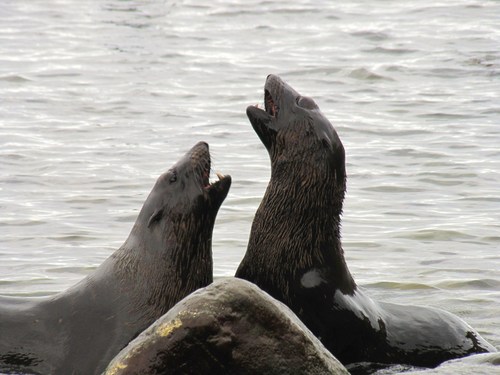
About Arctocephalus philippii townsendi Merriam, 1897
The Juan Fernandez fur seal, scientifically named Arctocephalus philippii townsendi Merriam, 1897, is a member of the eared seal group. Like all fur seals, it has thick insulating fur that protects its skin from cold water, small external ear flaps on the sides of its head, and supports its body weight with its front flippers, which it also uses for movement on land. This distinguishes fur seals from true seals: true seals lack visible external ear flaps, support and move themselves using their chest, while fur seals move on land by walking on their front flippers.
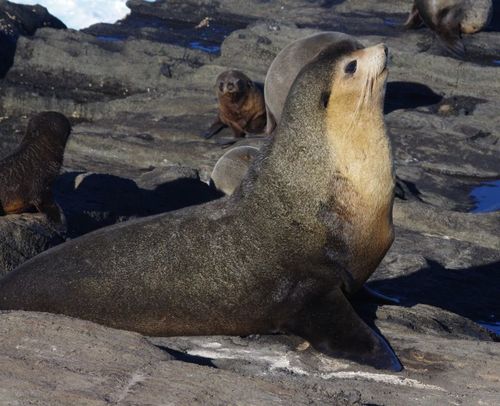
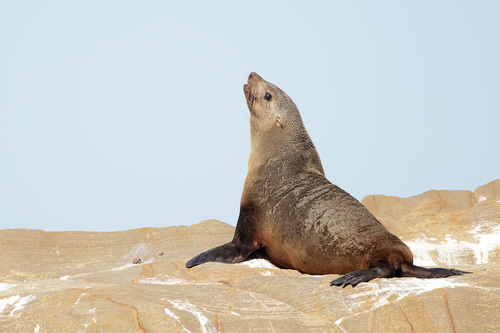
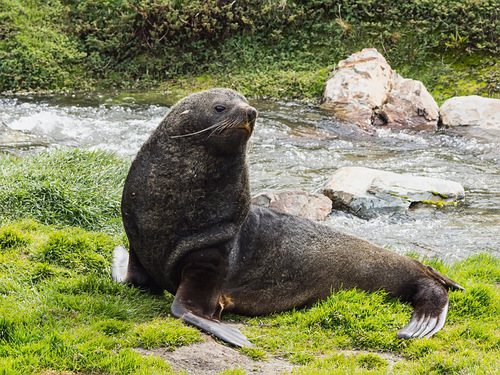
The Juan Fernandez fur seal is the second smallest species of fur seal; only the Galápagos fur seal is smaller. It has a short, robust body covered in brown fur, with relatively short fore flippers and hind flippers, and the digits of its hind flippers have fleshy tips. This species displays sexual dimorphism, meaning males and females look very different from one another once they reach sexual maturity. Females are lighter brown, averaging 100 pounds in weight and 4 feet 6 inches in length. Males are significantly larger, averaging 300 pounds and 6 feet 6 inches in length, with thicker necks and generally darker brown fur. Males also have thick guard hairs with golden tips on the back of their head, neck, and shoulders.
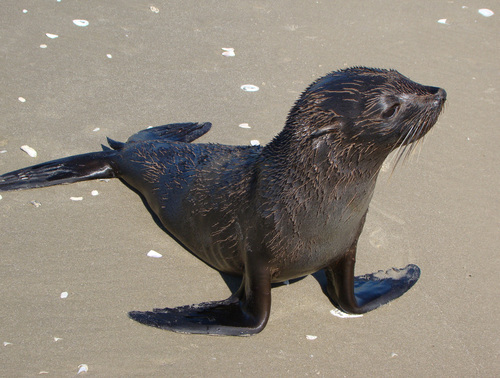
For reproduction, breeding is a territorial process for Juan Fernández fur seals: males fight aggressively to claim access to female resting sites. This species is polygynous, meaning a single male breeds with multiple females. Pups are born between November and December, and are weaned from their mother's milk at 10 months of age. Mothers stay with their new pups for around one week, then leave to mate again and forage for food. Newborn pups are covered in soft black fur that fades to light brown over their first few years of life.