About Archontophoenix alexandrae (F.Muell.) H.Wendl. & Drude
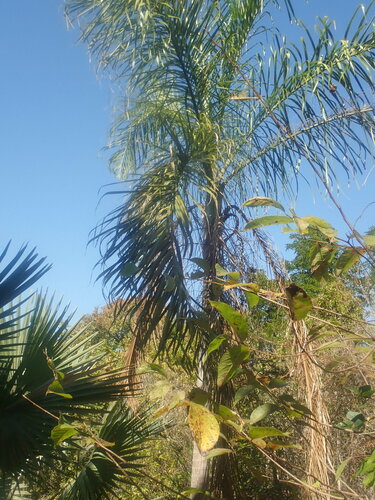
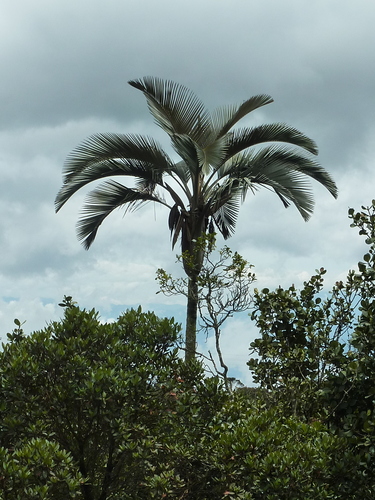
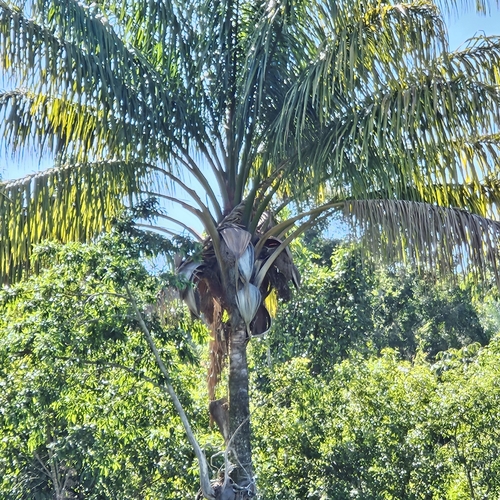
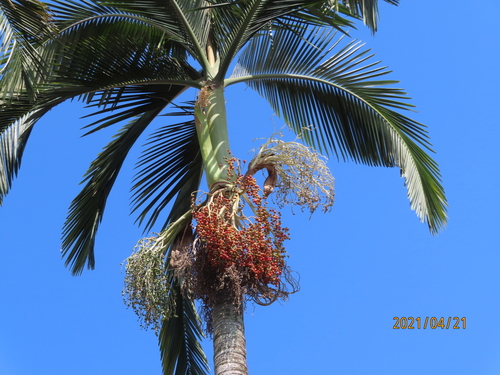
Archontophoenix alexandrae, the Alexandra palm, is a tall, solitary palm species. It reaches a maximum height of 30 m (98 ft), with a trunk that can grow up to 30 cm (12 in) in diameter. The trunk is often swollen at the base, and bears prominent leaf scars. Its graceful crown holds 8 to 10 pinnate, feather-like fronds, which reach up to 4.5 m (15 ft) in length, with 60 to 80 leaflets on each side of the midrib. The pinnae are dark green on the upper surface and silvery-grey on the underside, growing up to 75 cm (30 in) long, and the entire frond is usually twisted laterally. A large light green crownshaft up to 1 m (3.3 ft) high sits at the base of each frond.
This palm is native to north-east and central-east Queensland, Australia, with a native range extending from the Melville Range in Cape York Peninsula to south of Gladstone. It grows at altitudes from sea level up to 1,000 m (3,300 ft), and is most commonly found in lowland riparian rainforest alongside river courses and swamps, in locations that often become severely inundated during heavy rain. Its tolerance for these inundated conditions allows it to become the dominant species in these habitats.
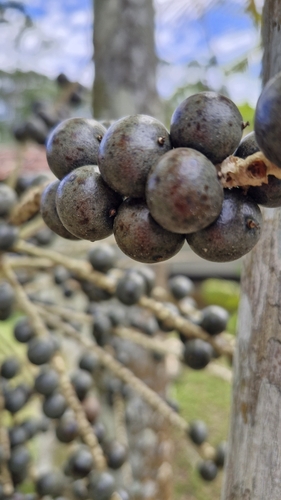
Many animal species eat the fruit of Archontophoenix alexandrae. Flocks of the metallic starling (Aplonis metallica) often descend on a single tree and may consume all ripe fruits within an hour. Other bird species that commonly eat its fruit include the Torresian imperial pigeon (Ducula spilorrhoa) and the wompoo fruit dove (Ptilinopus magnificus). Fruits of this palm are also consumed by fruit bats and the musky rat-kangaroo (Hypsiprymnodon moschatus).
The Kuku Yalanji people of Far North Queensland traditionally eat the palm heart of this species.
This species grows easily from fresh seed, and is very popular in cultivation in Australia, used in private gardens as well as a street tree and park tree. It grows quickly and can tolerate cooler climates outside the tropics in areas with no frosts. It has been widely planted across many countries, and has become naturalised in Hawaii.