About Archips rosana (Linnaeus, 1758)
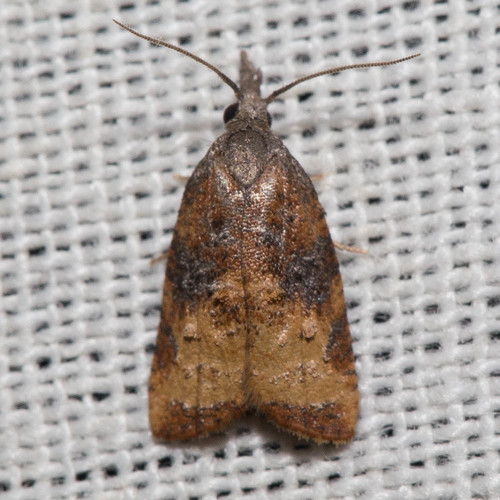
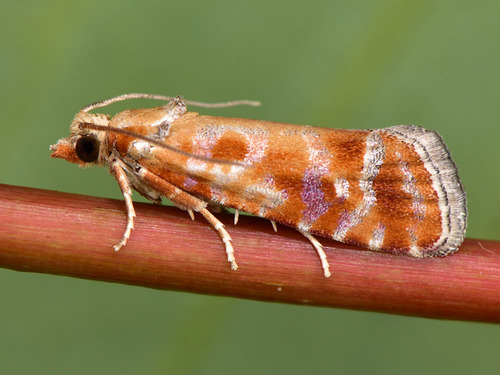
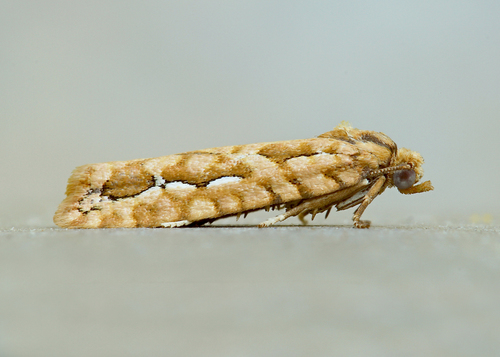
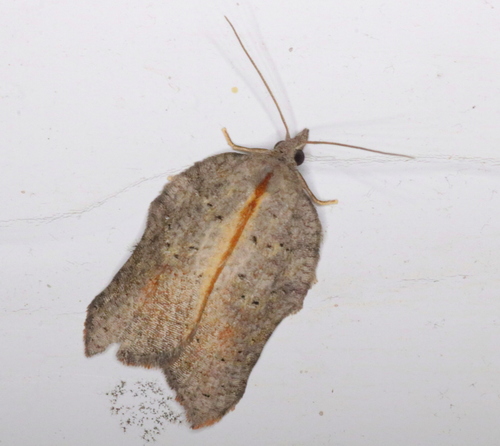
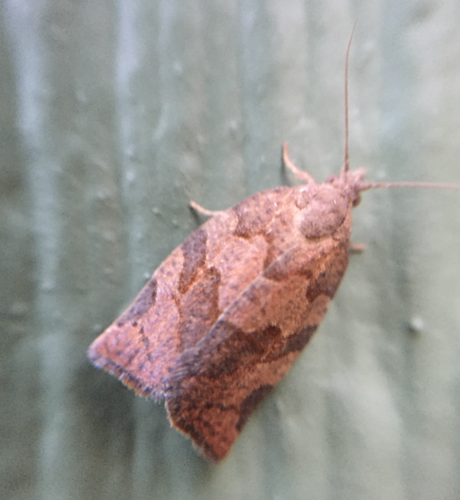
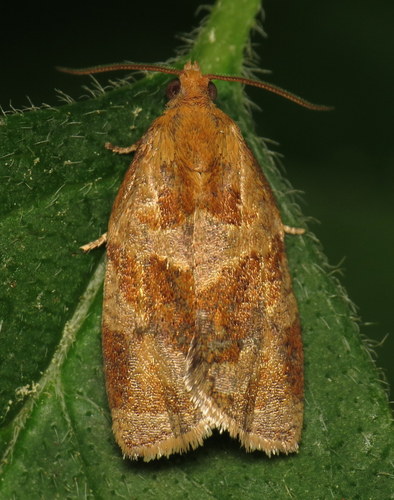
Scientific name: Archips rosana (Linnaeus, 1758). Archips rosana, commonly called the rose tortrix, is a moth species belonging to the family Tortricidae. It occurs in both the Palearctic and Nearctic realms. The wingspan of adult moths ranges from 15 to 24 mm. The forewings have a sinuate, vertical termen. The costal fold, which runs from the base to beyond the middle of the forewing, is irregular in shape and light brown, sometimes with a reddish tinge; in females, it has darker strigulation. A dorsal spot is present near the base of the forewing. The anterior edge of the central fascia is sinuate. There is a suffused darker brown costal patch that emits an interrupted stria; this marking is sometimes nearly obsolete in females, and there are also some dark terminal strigulae. The hindwings are grey, and the apex is usually more or less orange. The larva is dark olive-green, with a darker dorsal line, white tubercular spots, a brown head, and a blackish plate on the second segment that is whitish on its anterior portion. Julius von Kennel provides a full formal description of the species. Adult moths are in flight from May to August, with flight timing varying by location. Larvae feed inside rolled leaves of a variety of plants, including fruit plants like raspberry and cultivated rose. Pupation occurs between April and May. This species overwinters in the egg stage.