About Archips podana (Scopoli, 1763)
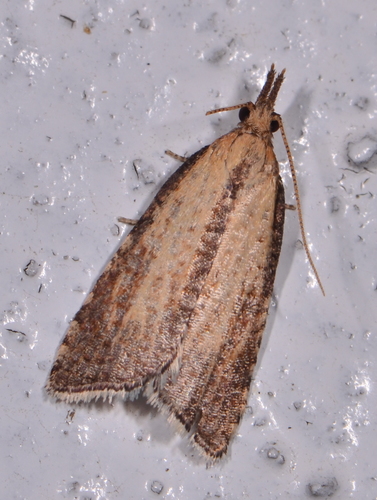
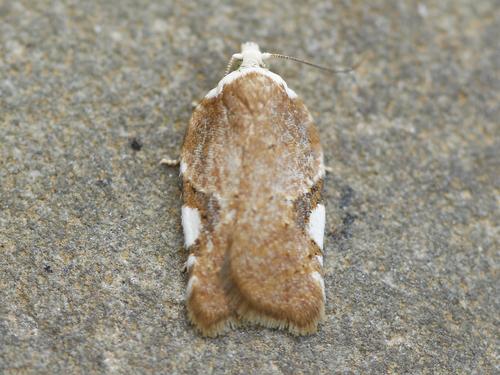
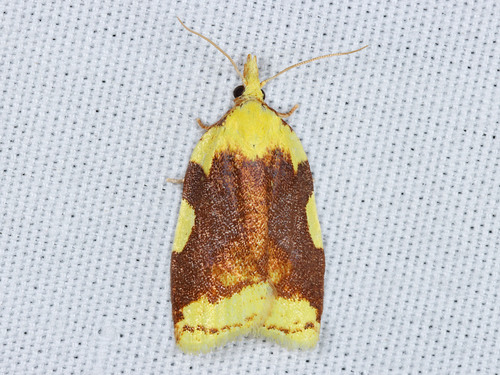
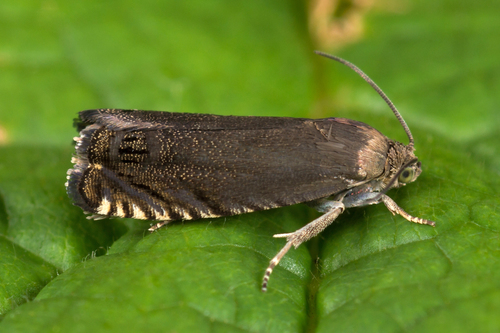
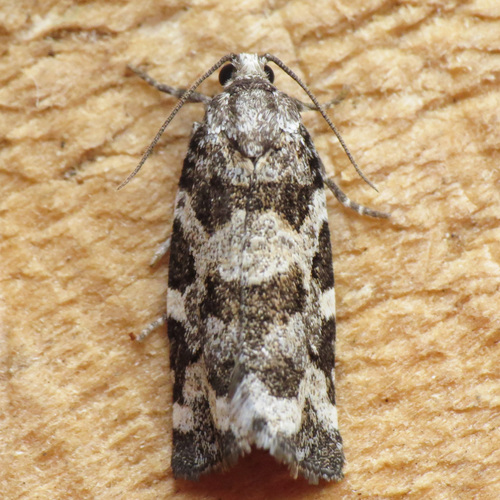
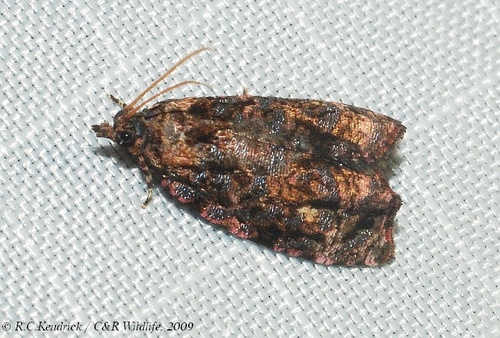
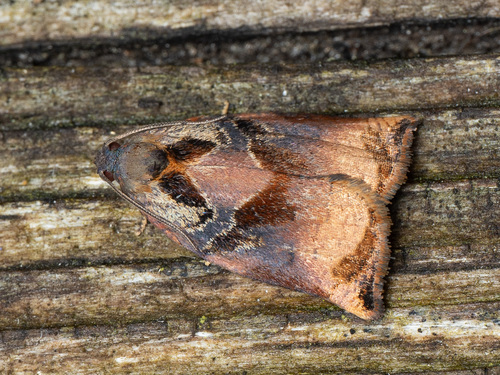
The wingspan of Archips podana is 18–26 mm. Its thorax bears a crest, and the forewings have a sinuate vertical termen. The short, basal costal fold is red-brownish or ochreous; in females, it is strigulated with dark brown. Males have a dark red-brown dorsal spot near the wing base, with a grey and whitish suffusion above this spot. The central fascia is dark red-brown in males, and brownish or only outlined in females, with an almost straight anterior edge. The costal patch, an apical terminal mark, and a stria that is thickened in males running from the tornus are all dark red-brown. The hindwings are grey, with a broadly orange apex. Full-grown larvae are green, sometimes with a darker dorsal line; their head and second thoracic plate are brown or black. Julius von Kennel provides a complete full description of this species. In western Europe, this moth has one generation per year, with adults active from May to September. Adults fly in the late afternoon and are attracted to light. Females lay eggs in multiple batches of 50 to 100 on the upper surface of leaves. Eggs are covered in a wax-like substance that closely matches the color of the leaf, making them difficult to find. Eggs hatch 17 to 23 days after being laid. Larvae are present from July to early May. They are polyphagous, feeding on a wide range of host trees and shrubs, including Malus (apple), Pyrus (pear), and Prunus (cherry, plum) species, and sometimes feed on conifers in the Coniferae family. For the first few days after hatching, larvae feed on both surfaces of leaves. After dispersing, they spin a fine web and feed on the underside of leaves. After their first ecdysis, larvae feed on the skin of fruit, spinning a leaf to use as shelter. They continue feeding until the fruit is picked or falls to the ground. They then overwinter inside a silken hibernaculum on a twig. In spring, as fourth instar larvae, they feed on opening buds, often boring into the buds, and later feed between two or more leaves that they have spun together. They pupate inside the larval habitation.