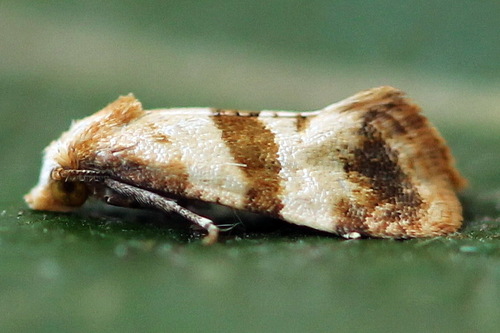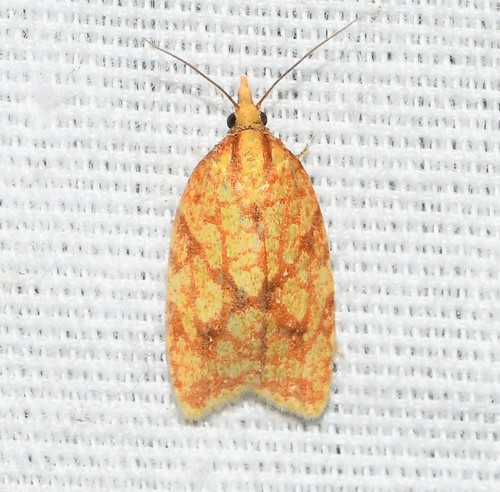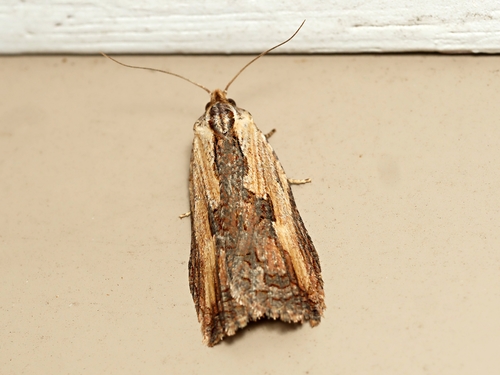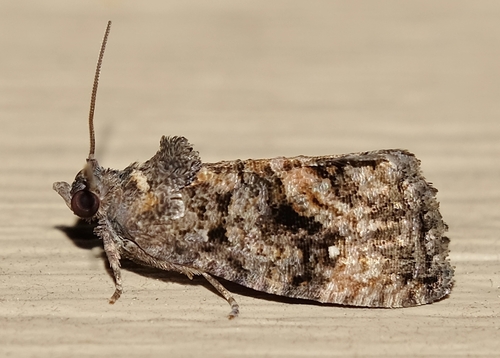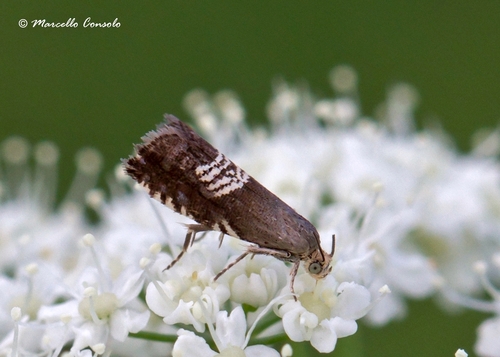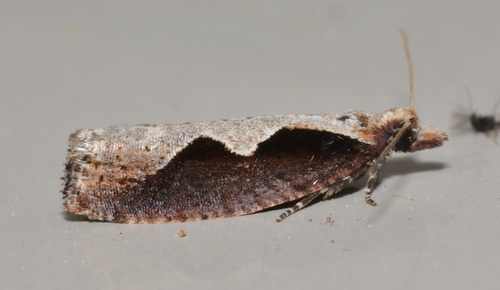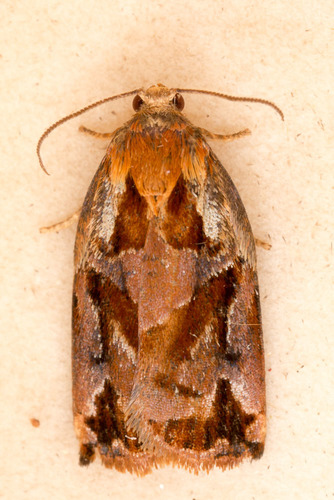
About Archips oporana (Linnaeus, 1758)
Archips oporana (Linnaeus, 1758) has a wingspan ranging from 19 to 28 millimetres, which is equal to 0.75 to 1.10 inches. In western Europe, this moth flies from late May to July, and a partial second generation occurs in August and September. Newly hatched larvae feed in September, tying two groups of needles together and attaching the bundle to the branch of their host plant. They overwinter inside a silken tube located among the host plant's needles. The following year, the larvae feed on new shoots and may bore into the stem. This feeding activity can cause the affected stems to shrivel and break off. When feeding on juniper, the larvae spin a thick white web among the plant's leaves. Pupation takes place within the larva's original living area in June and July. Larvae of this species are found feeding on a variety of conifers, including silver fir (Abies alba), European larch (Larix decidua), common juniper (Juniperus communis), spruce (Picea species), Scots pine (Pinus sylvestris) and cedars (Thuja species). This moth is distributed across most of Europe. In Asia, it is recorded in Heilongjiang and Liaoning provinces of China, Korea, Japan, and Primorye, Russia.