About Archeria traversii Hook.fil.
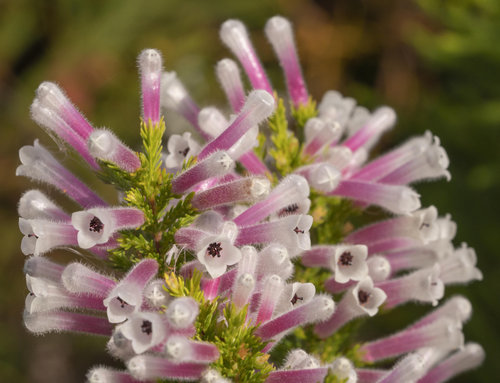
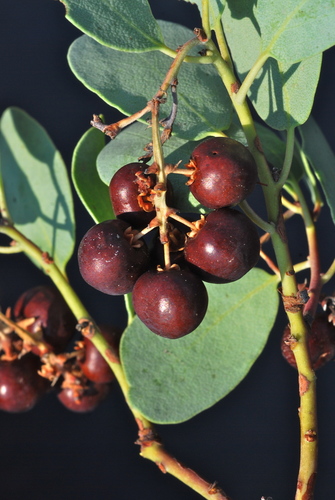
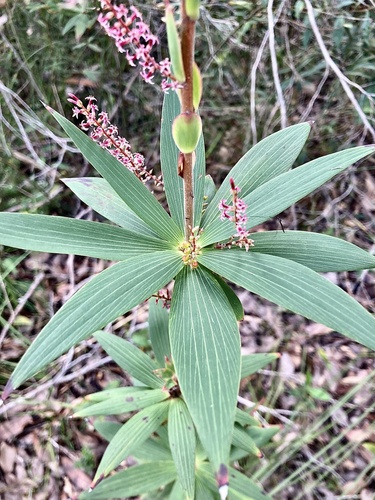
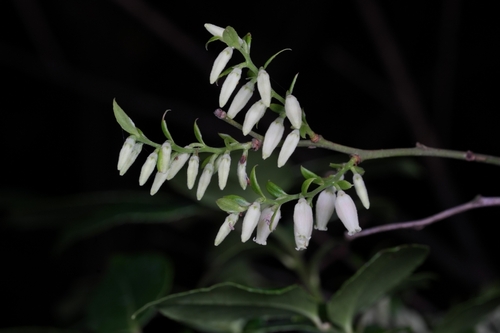
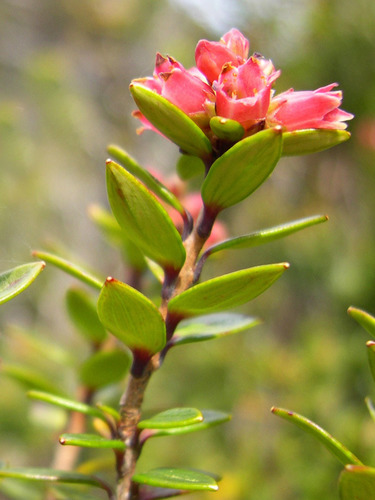
Archeria traversii Hook.fil. is an erect shrub that grows up to 5 m tall, though it is often much shorter. It has spreading to ascending branches, with leaves spaced fairly evenly along branches, rather than clustered as seen in A. racemosa. This species often forms multiple trunks, which are frequently highly twisted, rough, and covered in epiphytic bryophytes. Its bark is dark brown; young branchlets are light reddish, and mature branchlets are light brown. The leaves are narrow lanceolate, becoming glabrous and leathery with age. They are dark green on the adaxial (upper) surface, and much paler on the abaxial (lower) surface. Leaf apices range from acute to subacute, and sometimes take on a reddish colour. The leaf base is rigid and nearly sessile, attaching to the stem via a short, flat petiole. Mature leaves are typically 7–12 mm long and 2–4 mm wide. Leaf margins are entire, minutely ciliolate, and flat to slightly recurved. Prominent 3- to 5-veined venation is often visible on the abaxial side of leaves. The inflorescence is a single terminal raceme that holds 8–16 flowers, and measures 10 to 30 mm in length. Both the inflorescence axis and short curved pedicels are pubescent. The bracts are oblong and caducous. The flowers are perfect, 4–5 mm long, and urn-shaped. Their corolla ranges in colour from white to pink to deep red, and is often lighter at the base and darkens towards the lobes. The sepals are oblong and ciliolate; they are most often light green, turning red towards their tips. The fruiting capsules are 2–3 mm in diameter, and contain 3–5 locules. Archeria traversii is endemic to southern New Zealand, where it is scattered locally across the South Island and Stewart Island. It is notably absent from Marlborough and most of the eastern South Island. It grows primarily in shrublands and conifer-broadleaf forests, at lowland to montane altitudes. It flowers from December to February, and fruits from February to April.