About Araucaria cunninghamii Aiton ex A.Cunn.
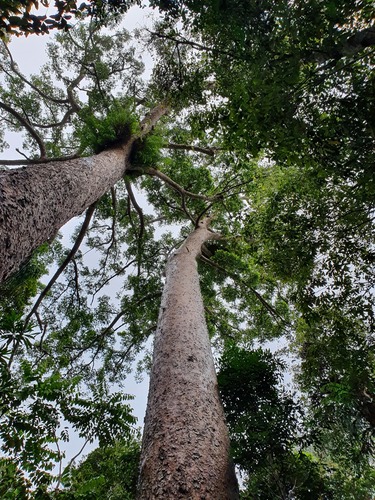
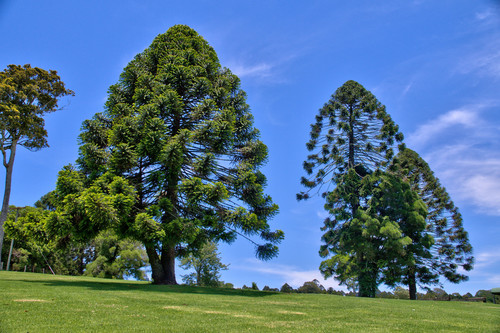
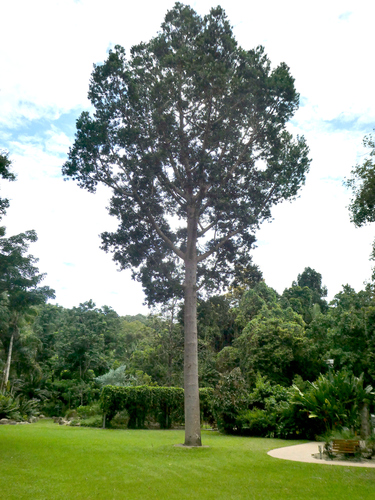
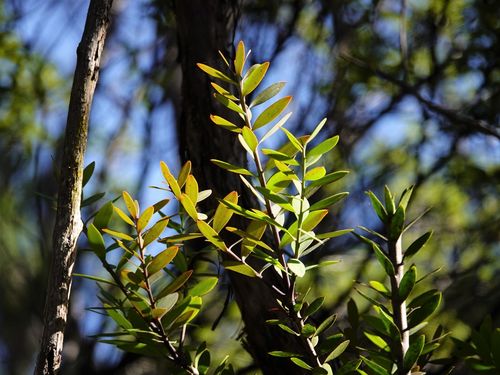
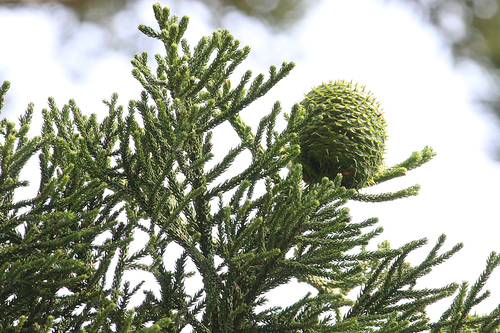
Araucaria cunninghamii Aiton ex A.Cunn. has different leaf forms on young and mature trees: leaves on young trees are awl-shaped, 1–2 cm long, and around 2 mm thick at the base, while leaves on mature trees are scale-like, incurved, 1–2 cm long, and 4 mm broad. Its cones are ovoid, 8–10 cm long and 6–8 cm in diameter, take approximately 18 months to mature, and disintegrate at maturity to release nut-like edible seeds. The rough bark splits naturally and peels easily. Mature trees can reach a height of 60 metres and live up to 450 years. This species grows in the dry rainforests of New South Wales and Queensland (Australia) as well as in New Guinea. Documented populations occur on ridges and mountaintops in Queensland's North Burnett region, sometimes in large numbers where dry rainforest still remains, including on the summit of Mount Perry and on ridges north of Mount Walsh National Park. It can also be found inland from Gympie in the Wide Bay, and at lower elevations around homesteads, where trees may have been retained for their aesthetic value. Visible examples grow off the road to the lookout above the town of Mount Perry, and a number of trees line the road approaching the town from Gin Gin. Its wood is a high-quality timber that is especially important to the plywood industry, and is also used for furniture, veneer, joinery, panelling, particle board, flooring, and boats. Most natural stands of this species in Australia and Papua New Guinea have been depleted by logging. Now the species is mainly found on timber plantations, but it continues to thrive in protected areas, including Lamington National Park, where at least one walking track is named after it. Aboriginal Australians traditionally used the resin of this tree as cement.