About Araniella cucurbitina (Clerck, 1757)
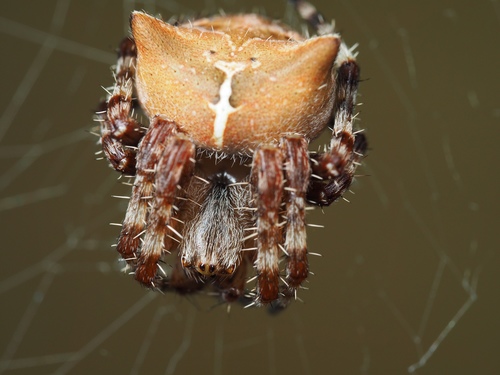
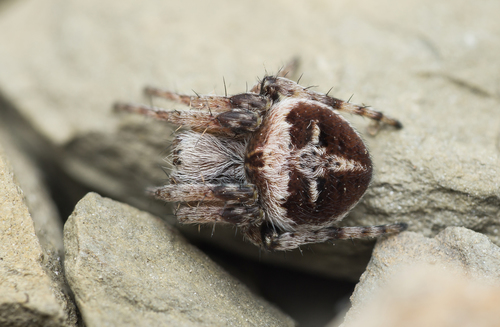
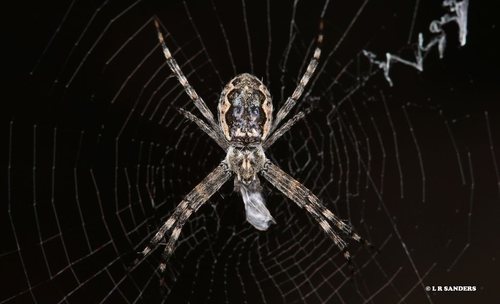
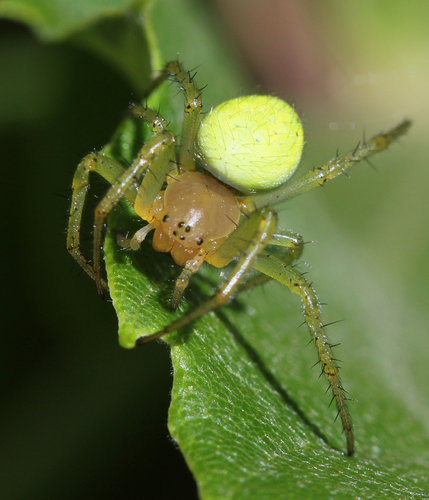
Araniella cucurbitina (Clerck, 1757) displays clear sexual dimorphism: females are larger and broader-bodied, while males are generally much slimmer with more developed limbs. Females reach a body length of 4.5–9.5 millimetres (0.18–0.37 in), while males only reach 3.5–4.5 millimetres (0.14–0.18 in). Adult spring spiders have a basic green base color. The cephalothorax (prosoma) ranges from light yellowish to red-brown, while the abdomen (opisthosoma) is distinctly green or yellowish green, with four pairs of black lateral spots. The legs are yellowish green or yellow-red-brown, and a red mark is present on the lower end of the abdomen. Males have ampoule-like copulatory organs called palpal bulbs at the ends of their pedipalps, which are used to transfer sperm to females. Newly hatched spiderlings are red, and turn brown before autumn. Araniella opisthographa is an almost identical spider that can only be distinguished from A. cucurbitina through microscopic examination. This species occurs across the Palaearctic, and is widespread in north-western and central Europe, Turkey, and Central Asia extending to China and Korea. It is also found in parts of North America, where it was probably introduced. These spiders live mainly on forest clearings, in woods, bushes, scrub, hedgerows, and low vegetation.