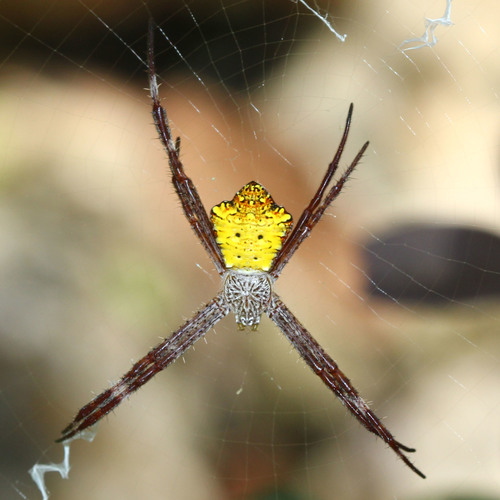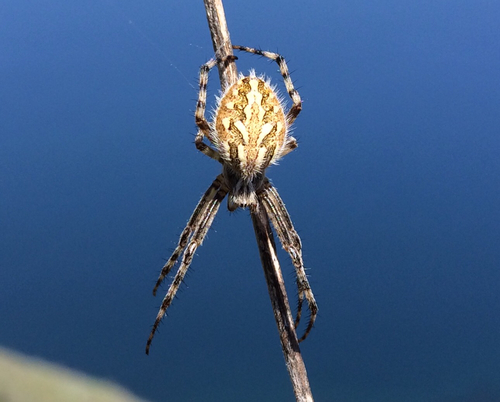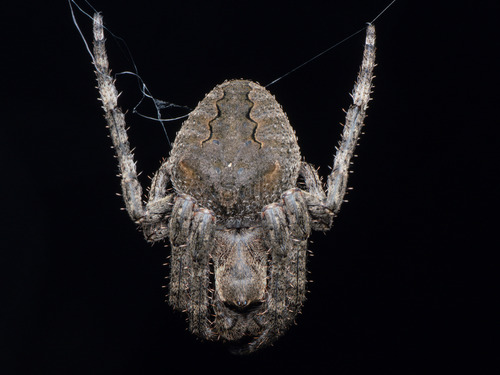
About Araneus ventricosus (L.Koch, 1878)
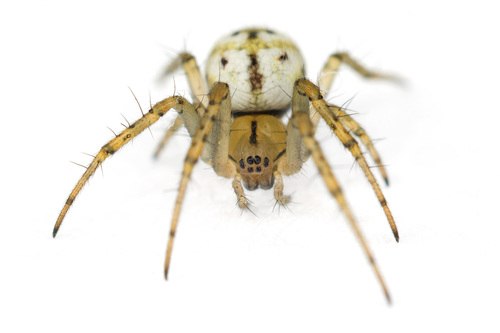
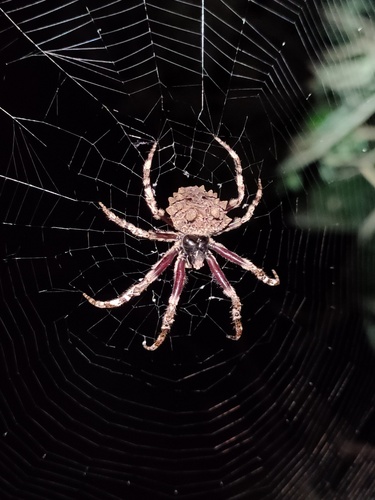
Araneus ventricosus (L.Koch, 1878) is a medium-sized orb-weaver spider, most commonly brown, black, or gray in color. Like other species in its family, it builds circular webs to catch prey, but has distinctive nocturnal habits: it constructs its web over the course of the night, then takes it apart each morning. Males perform elaborate mating displays as part of courtship behavior for reproduction. As adults, these spiders are predators that feed mainly on flying insects and other small arthropods trapped in their webs.
Araneus ventricosus does not pose a major threat to humans, but it may occasionally bite larger animals when it is handled. This species has selectively toxic venom: it is highly effective against its invertebrate prey, but the venom has no activity in vertebrates. Chemical analysis of the venom has found unique compositional properties, including the first documented case of glutamic acid methylation in any animal venom, and protein databases have identified 130 distinct toxin-related protein chains.
Araneus ventricosus is distributed across East Asia, with recorded ranges covering the Russian Far East, Korea, Japan, China, and Taiwan. This spider lives primarily in gardens, fields, and forest ecosystems.