About Araneus gemmoides Chamberlin & Ivie, 1935
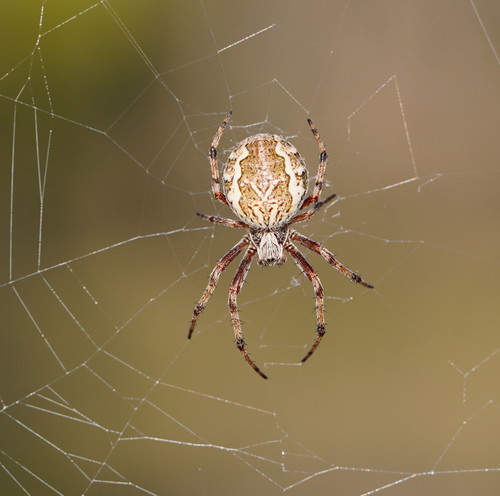
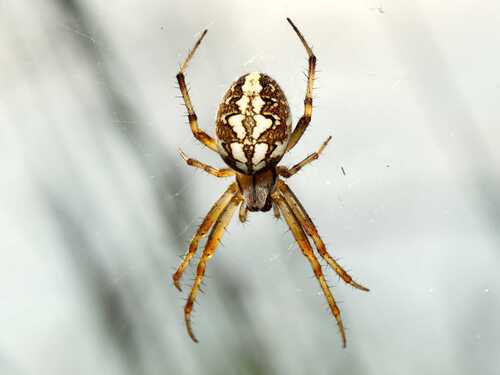
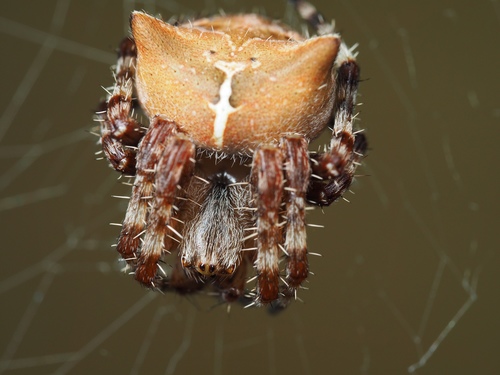
Araneus gemmoides, described by Chamberlin & Ivie in 1935, is commonly called the jewel spider (a name it shares with Austracantha minax) and the cat-faced spider (a name it shares with Araneus gemma). This is a common outdoor orb-weaver spider found in Canada and the United States. It is considered harmless, and its venom has low toxicity. A. gemmoides is a useful natural predator of insects. It builds its webs near lights, in enclosed spaces, and along the sides of buildings. It can also be found under wood, beneath overhangs, or in protected locations such as animal burrows. This species comes in a range of different colorations, but it can be easily identified by two horn-shaped growths on its relatively large abdomen. Its color changes between summer and winter. Female A. gemmoides die within days of laying a single egg sac that holds hundreds of eggs. The egg sacs can survive through winter, and emerging spiderlings eat their siblings. Young spiders ride on silk strands carried by warm air currents, which can carry them to locations miles away from their hatching site. Females have a larger abdomen and head, while males have much smaller abdomens and longer bodies. Both sexes eat a variety of prey, ranging from mayflies, house flies, and mosquitoes to other small spiders.