About Araneus apricus (Karsch, 1884)
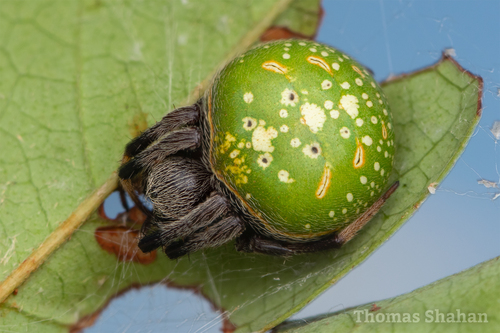
Araneus apricus (Karsch, 1884) is a species of spider in the family Araneidae, commonly called the green pea spider. It has a wide distribution across Africa, with confirmed records from São Tomé, Yemen, Socotra, Botswana, Namibia, Zimbabwe, Zambia, Eswatini, Tanzania, and South Africa. Within South Africa, the species is found in eight of the country's nine provinces, at altitudes ranging from 7 to 1,556 meters above sea level. This spider is most commonly found in warmer tropical regions, where it builds orb-webs with a sheltered retreat on one side of the web. It occurs across multiple biomes, including Grassland, Savanna, Indian Ocean Coastal Belt, Fynbos, and Thicket biomes; in South Africa, it has been recorded in all floral biomes except the Succulent Karoo. In South Africa, Araneus apricus has been collected from agricultural sites, including avocado orchards, citrus orchards, macadamia orchards, and tomato fields. It is also found within more than 10 protected areas, including Addo Elephant National Park, Kruger National Park, De Hoop Nature Reserve, and Polokwane Nature Reserve. Araneus apricus is one of the few araneid spiders that has a published case study documenting bite symptoms, though no serious medical effects from its bite have been documented.