About Aquila hastata (Lesson, 1831)
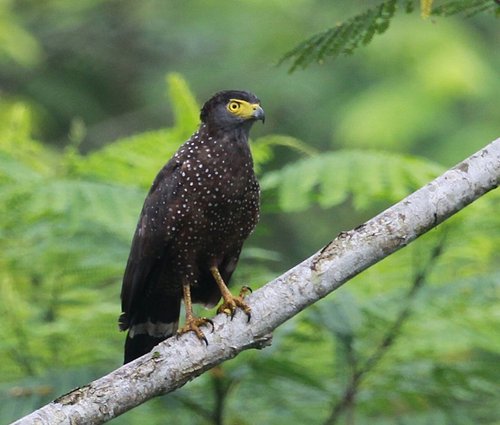
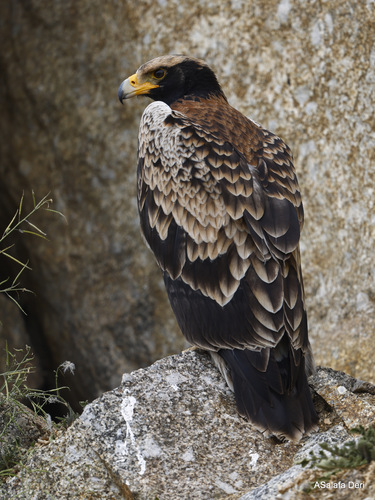
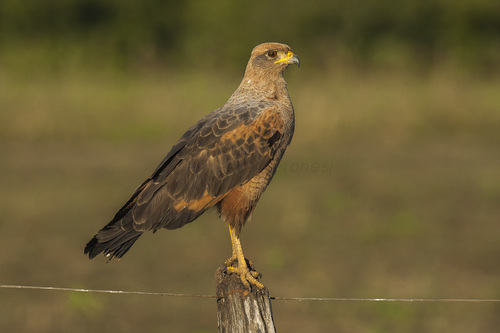
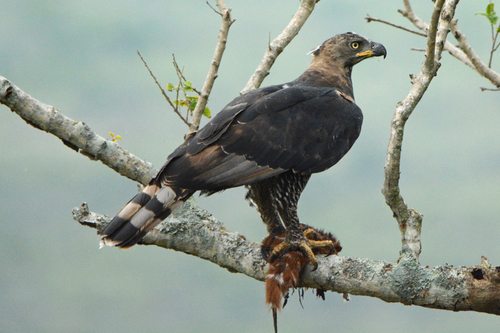
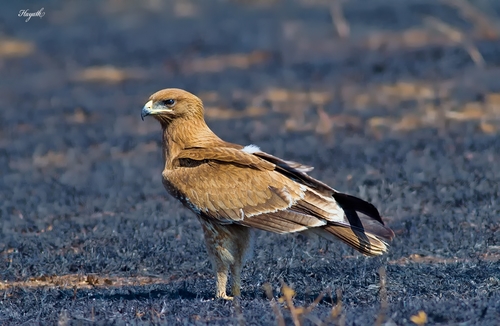
The Indian spotted eagle (scientific name Aquila hastata (Lesson, 1831)) reaches approximately 60 cm in length, with a wingspan of 150 cm. It has a broad head, and the widest mouth of all spotted eagles. Overall, this species is lighter in plumage than its close relatives, and has a darker iris that makes its eyes appear darker than its body feathers. This pattern is reversed in the two northern spotted eagle species, where the plumage is darker than the eyes. Adults can be distinguished from greater spotted eagles by their lighter coloration, darker eyes, and different habitat preferences. Young Indian spotted eagles develop a glossy brown plumage after around three to four months. The tips of the head and neck feathers are creamy, creating a spotted look. Their upper tail coverts are light brown with white markings that give a barred appearance, and their median coverts have large creamy spots. After approximately eighteen months, the bird moults, develops darker plumage, and has fewer spots. Unlike older juvenile lesser and greater spotted eagles, some older juvenile Indian spotted eagles do not have strong spotting, which makes the common name somewhat misleading. Older juvenile Indian spotted eagles also lack the creamy buff nape patch that is present in juvenile lesser spotted eagles. The Indian spotted eagle is native to Bangladesh, Cambodia, India, Myanmar, Nepal, and occurs marginally in Pakistan. It lives in agricultural landscapes and tropical dry forests.