About Apotomis betuletana (Haworth, 1811)
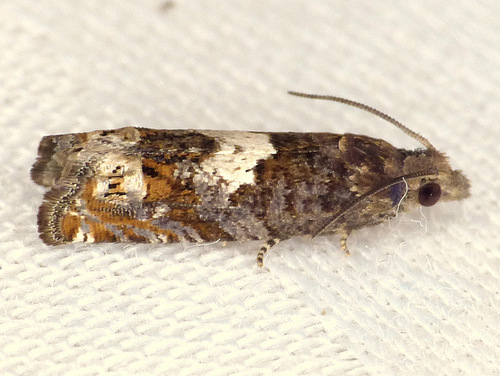
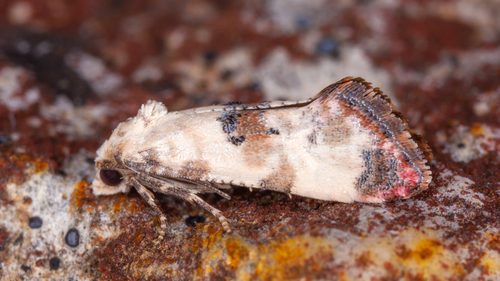
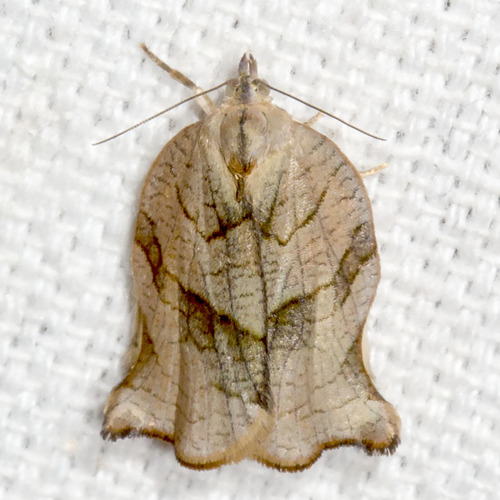
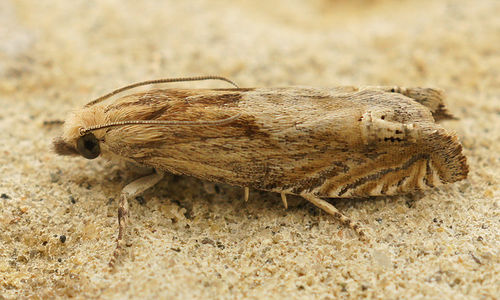
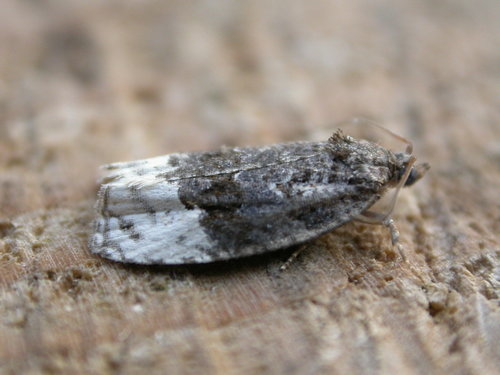
Apotomis betuletana, first described by Haworth in 1811, is a moth species belonging to the family Tortricidae. This species occurs across most of Europe, and also in the eastern portion of the Palearctic realm. The adult wingspan measures 16–20 mm. Its forewings are white, sometimes partially tinged with ochre, with fine grey transverse lines (striae) on the posterior section. The basal patch and central fascia of the forewings are dark brown, marked with black, and the space enclosed within these areas is dark ashy-fuscous. All these regions are lightly sprinkled with white, and are sometimes mixed with more white along the forewing fold. The posterior edge of the central fascia is nearly straight, and is followed by a faint pinkish-ochreous tinge at the center of the wing. The hindwings are grey, and turn darker toward the posterior. The larva is overall green, with yellowish coloration along the body incisions. Its dorsal and subdorsal lines are grey-green, its tubercular spots are yellow, its head is yellow-green, and the thoracic plate on the second segment is pale green. Julius von Kennel published a full formal description of the species. Adult Apotomis betuletana are active and in flight from July to September. The larvae feed on Betula birch species, and create a protective structure by spinning and rolling the leaves of their host plant. Larvae can be found between May and June.