About Aporophyla lueneburgensis Freyer, 1848
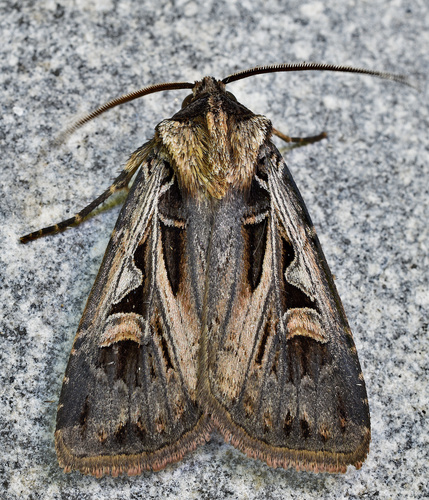
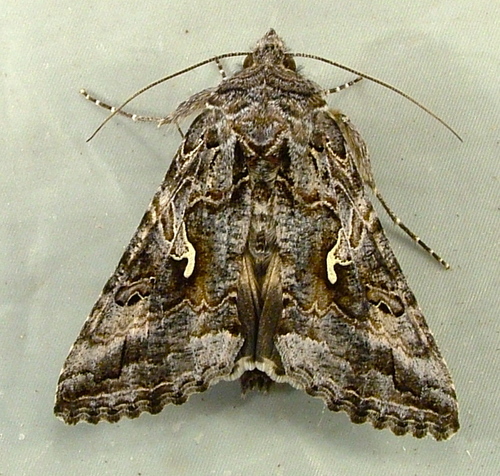
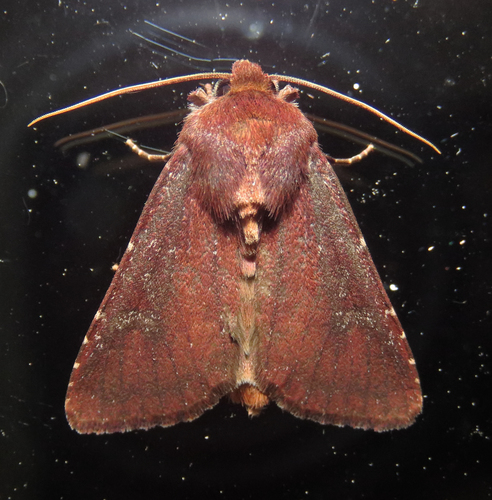
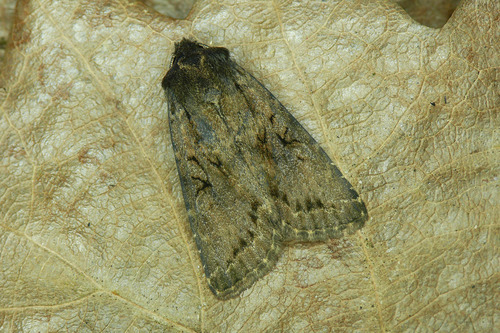
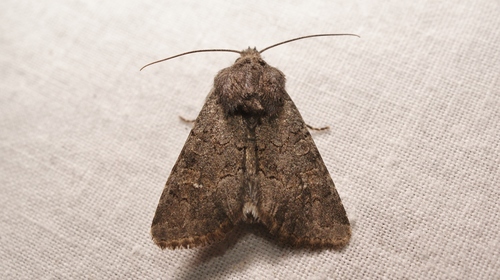
The northern deep-brown dart, scientifically named Aporophyla lueneburgensis, is a moth belonging to the family Noctuidae. It was first formally described by Christian Friedrich Freyer in 1848. This species is distributed across northern and western Europe. As its common name implies, most individuals have forewings that range from very dark brown to purplish grey, though paler grey colour morphs do occur. A much darker central band is always present on the forewings, and this band is almost black in the darker-coloured forms. All of the wing lines and stigmata are very neatly marked, and outlined with a paler colour. In contrast, the hindwings are much paler; they are often almost pure white in males, though they typically have darker-coloured venation. The wingspan of this moth measures 36 to 41 millimetres. Compared to the related species Aporophyla lutulenta, Aporophyla lueneburgensis is distinctly smaller and has a neater overall appearance. It flies at night during the months of August and September. It is attracted to light, sugar bait, and a variety of different flowers. The larva most commonly feeds on heather, but it has also been recorded feeding on other low-growing plants, including bird's-foot trefoil. This species overwinters when it is still a small larva.