About Apoica pallens (Fabricius, 1804)
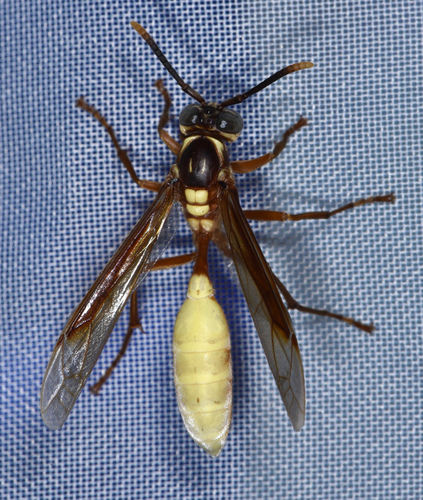
Apoica pallens (Fabricius, 1804) is a wasp species that is pale yellow in color. Like other species in the tribe Epiponini, it shows morphological caste differentiation between workers and queens. In Apoica pallens, queens and workers are usually around the same total body size. However, queens tend to be smaller than workers in the anterior (front) portion of the body, and significantly larger in the posterior (rear) portion. This caste differentiation is thought to be caused by differences in ovary development between castes.
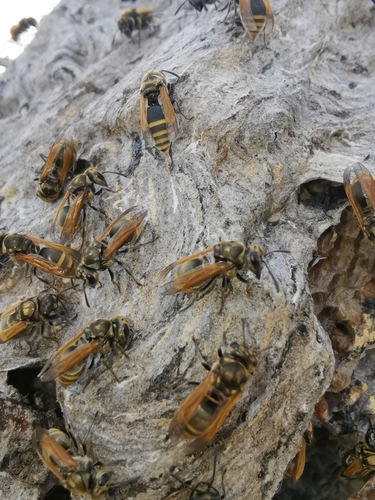
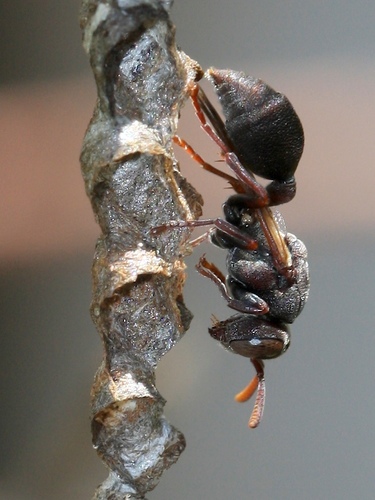
Nests of the Apoica genus, including those of Apoica pallens, do not have an enclosing outer envelope. They are made of a single comb that hangs down from a branch. Large Apoica pallens nests have a distinctive appearance that resembles a straw hat or basket.
Populations of Apoica pallens are native to the lowlands of Central America and northern South America. They typically live in tropical savanna, semi-deciduous tropical dry forest, gallery forest, and marshland. Apoica is one of the prominent wasp genera of the New World Tropics, and Apoica pallens is quite abundant across its range.
Apoica pallens nests are used in traditional Brazilian folk medicine. Folk medicine is common across many regions of Brazil, and insects are regularly included in folk remedies, with specific insect species used for distinct health purposes. Medicinal insects act as natural drug resources for certain traditional healing practices targeting a range of ailments. Apoica pallens nests are specifically important to the indigenous Pankarare people and rural populations of Brazil. To treat stroke, people burn these wasp nests and inhale the resulting smoke. When someone believes evil is present in their life, they bathe in this smoke from the burning nest as treatment. In Matinha dos Pretos, pieces of the nest are boiled in water to make a tea used to treat asthma.