About Apocynaceae
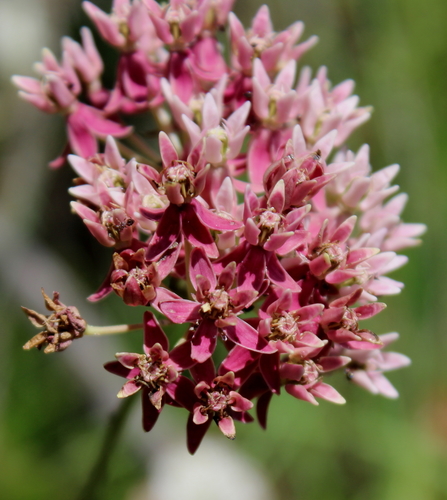
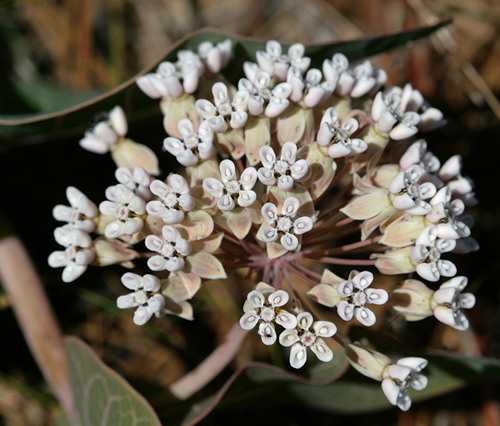
Apocynaceae, whose name comes from Apocynum, the Greek term for "dog-away", is a family of flowering plants. It includes trees, shrubs, herbs, stem succulents, and vines, and is commonly called the dogbane family, because some of its taxa were historically used as dog poison. Well-known members of this family are oleander, dogbanes, milkweeds, wax plants, and periwinkles. The family is native to the tropics or subtropics of Europe, Asia, Africa, Australia, and the Americas, and also has some species that grow in temperate regions. The former separate family Asclepiadaceae is now treated as the subfamily Asclepiadoideae within Apocynaceae, and this subfamily contains 348 genera. A full list of Apocynaceae genera is available elsewhere. Many Apocynaceae species are tall trees native to tropical forests, but some grow in tropical dry (xeric) environments, and there are also perennial herb species from temperate zones in the family. Most species produce milky latex, many species are poisonous if ingested, and the family has a high number of genera that contain alkaloids and cardiac glycosides. Genera that contain cardiac glycosides have often been used to make arrow poisons. Some Apocynaceae genera, such as Adenium, produce clear sap with no latex when damaged, while other genera such as Pachypodium produce milky latex separate from their sap. Apocynaceae species are mainly distributed across tropical regions, with specific occurrence patterns across different areas: In the tropical forests and swamps of Indomalaya, small to very tall evergreen trees up to 80 m (260 ft) tall, often with buttress roots, such as Alstonia and Dyera, grow here. In Australia, Apocynaceae occurs in all habitats, with around 46 genera and around 200 species (around 20 of which are naturalised), including growth forms of herbs, vines, shrubs, and trees. In the deciduous forests of Africa, India, and Indo-China, smaller trees such as Carissa, Wrightia, and Holarrhena grow here. In tropical America, India, Myanmar, and Malaya, evergreen trees and shrubs such as Rauvolfia, Tabernaemontana, and Acokanthera are found. In Central America, Plumeria (frangipani) grows, producing waxy white or pink flowers with a sweet scent. In South America, Africa, and Madagascar, many lianas such as Landolphia grow. In the Mediterranean region, Nerium, which includes the well-known oleander (also called be-still tree, Nerium oleander), and Calotropis procera (Apple of Sodom) grow here; other Calotropis species extend into South Asia. The only Apocynaceae genera found in temperate Europe outside the Mediterranean are Vinca (subfamily Rauvolfioideae) and Vincetoxicum (subfamily Asclepiadoideae). Asclepias syriaca is an invasive weed in many areas, including much of Ukraine. In North America, Apocynum (dogbane or Indian hemp, including Apocynum cannabinum, a traditional source of fiber) and Amsonia (bluestars, upright herbaceous perennials grown as ornamental plants for their attractive flowers) are found. In continental southern Africa (Angola, Botswana, Eswatini, Mozambique, South Africa, and Zimbabwe) and Madagascar, Pachypodium and Fockea occur; they are not found in the humid evergreen forests of eastern Madagascar, and never grow above 2,000 m (6,600 ft) anywhere on the island. Several Apocynaceae genera are preferred larval host plants for the Queen Butterfly (Danaus gilippus). Many Apocynaceae species have some level of toxicity, and some are extremely poisonous if plant parts are ingested or if the plant is not handled properly. Genera that contain cardiac glycosides, including Cerbera, Nerium, Asclepias, Cascabela, Strophanthus, Acokanthera, Apocynum, and Thevetia, have compounds with therapeutic uses, but are often linked to accidental poisonings, many of which are lethal. Alkaloid-producing species such as Rauvolfia serpentina, Catharanthus roseus, and Tabernanthe iboga are also sources of compounds with therapeutic properties, but carry significant toxicity if not taken at appropriate doses in controlled conditions. Several Apocynaceae members have had economic uses historically. Multiple genera are sources of important natural products, including pharmacologic research compounds, drug development candidates, and in some cases approved prescription drugs. Cardiac glycosides, which affect heart function, are a key example. Genera confirmed to contain these glycosides include Acokanthera, Apocynum, Cerbera, Nerium, Thevetia, and Strophanthus. Rauvolfia serpentina (Indian snakeroot) contains the alkaloid reserpine, which has been used as an antihypertensive and antipsychotic drug, but its adverse effects limit its current clinical use. Catharanthus roseus produces alkaloids used to treat cancer. Tabernanthe iboga, Voacanga africana, and Tabernaemontana undulata contain the alkaloid ibogaine, a psychedelic drug that has been studied for helping with drug addiction, but has significant adverse effects: ibogaine is both cardiotoxic and neurotoxic. Ajmalicine, an alkaloid found in Rauvolfia species, Catharanthus roseus, and Mitragyna speciosa, is an antihypertensive drug used to treat high blood pressure. Many Apocynaceae genera are grown as ornamental plants, including Amsonia (bluestar), Nerium (oleander), Vinca (periwinkle), Carissa (Natal plum), Allamanda (golden trumpet), Plumeria (frangipani), Thevetia, Mandevilla (Savannah flower), and Adenium (desert-rose). Additionally, the genera Landolphia, Carpodinus, and Mascarenhasia have been used as commercial sources of lower-quality rubber (notably Congo rubber). There are limited dietary uses for Apocynaceae plants. The flower of Echites panduratus (common name loroco) is edible. Carissa (Natal plum) produces an edible fruit, but all other parts of the plant are poisonous. The genus Apocynum was reportedly used as a source of fiber by Native Americans. The aromatic fruit juice from Saba comorensis (synonym Landolphia comorensis, also called Bungo or Mbungo fruit) is used as a drink. Ethnopharmacologic and ethnotoxic uses are also recorded. The roots of Tabernanthe iboga and certain Voacanga species have been used traditionally as ceremonial hallucinogens in Africa. The ibogaine-type alkaloids responsible for these plants' psychoactivity have been studied for the treatment of drug addiction. The juice of Acokanthera species such as A. venenata and the milky juice of Namibian Pachypodium have been used to poison arrow tips. Many species are grown as ornamentals in gardens or kept as houseplants.