About Apium prostratum subsp. prostratum
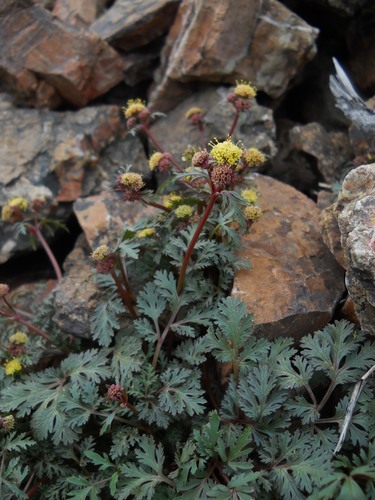
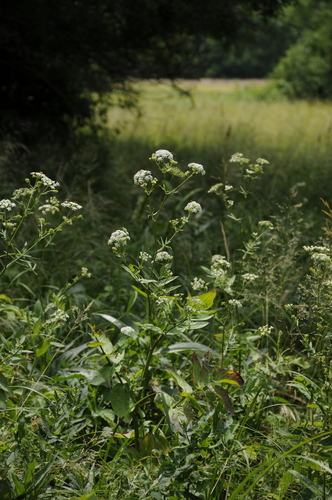
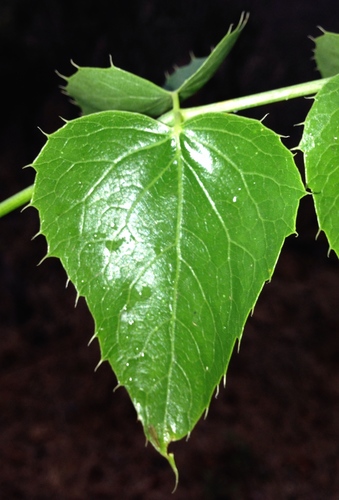
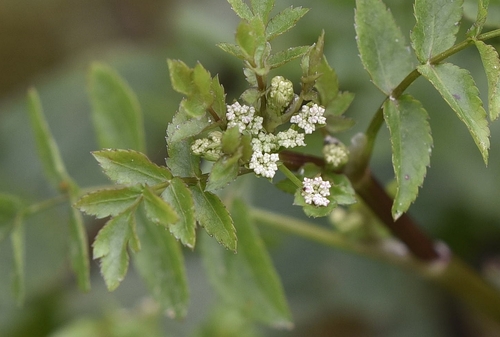
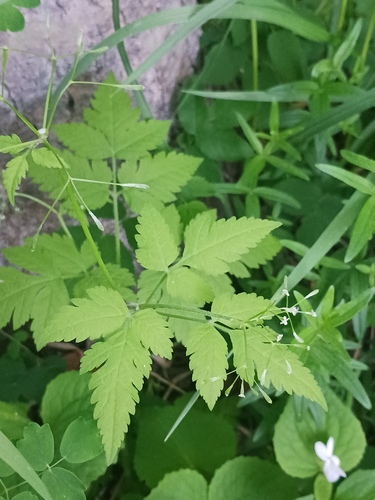
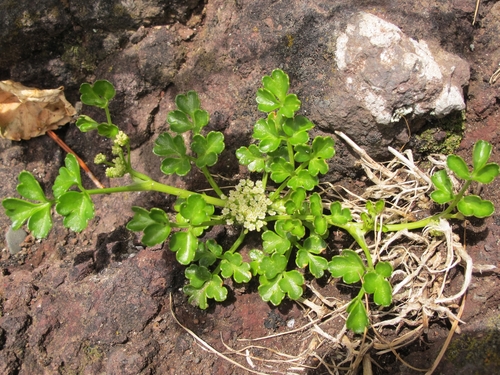
Apium prostratum, commonly known as sea celery, is a variable herb native to coastal Australia and New Zealand. Its leaves are variable, with toothed leaflets, and carry a celery-like aroma. Tiny white flowers grow in clusters on this plant. Two varieties of Apium prostratum subsp. prostratum are recognized. Apium prostratum var. filiforme, called headland sea celery, is a squat form with broad leaves 2 to 3 times longer than wide, and grows on coastal dunes and headlands. Apium prostratum var. prostratum, called mangrove sea celery, is upright with fine leaves 6 to 15 times longer than wide, and grows in swamps. The separate subspecies Apium prostratum subsp. howense is endemic to Lord Howe Island. Sea celery, known as Tutae Koau to Māori in New Zealand, is commonly eaten by Māori. It was also an important vegetable for early explorers and colonists in Australia and New Zealand. Captain Cook ate sea celery at Botany Bay, and gathered it in bulk along with Lepidium oleraceum at Poverty Bay, New Zealand in October 1769 to protect his crew from scurvy. It was commonly eaten as a survival food by colonists during the early days of the Sydney colony. Both the leaves and stems of sea celery are eaten. Dried leaves are used in native Australian spice mixes. It has a very similar taste to celery, and is used to flavor soups. Variety filiforme is considered more palatable than the other variety. It was cultivated as a vegetable by colonists around Albany, Western Australia. Today it is grown commercially to a limited extent.