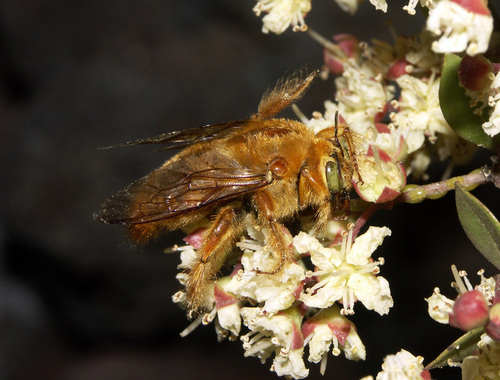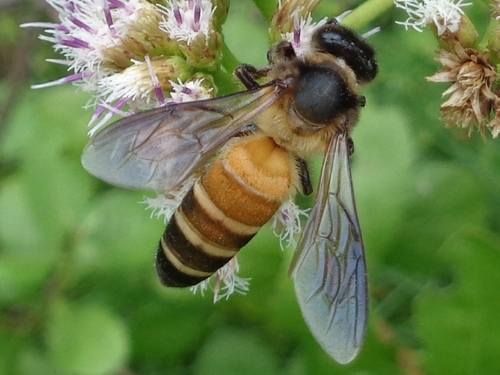
About Apis dorsata Fabricius, 1793
Apis dorsata, commonly called the rock bee or giant honey bee, is a honey bee species native to South and Southeast Asia. Adult bees are typically 17–20 mm (0.7–0.8 in) in length. Their nests are mostly built in exposed locations high above the ground, including tree limbs, the undersides of cliff overhangs, and the undersides of buildings. This is a social bee species well known for aggressive defensive strategies and vicious behavior when disturbed. Although A. dorsata has never been domesticated, indigenous communities have traditionally collected honey and beeswax from wild colonies in a practice called honey hunting.
A. dorsata ranges across the region from the Indian subcontinent to Southeast Asia. The largest populations of the species are located in China, Malaysia, Indonesia, India, Pakistan, and Sri Lanka. In the Philippines, A. dorsata was once very abundant, but populations are now relatively rare due to deforestation and widespread human mindsets toward the bees. The species mostly lives in tall trees within dense forests, but it also builds nests on buildings in urban areas. As a tropical bee species, A. dorsata undergoes seasonal migration in most of its range. Individual entire colonies move between nesting sites during the seasonal transition from the rainy season to the dry season, and occupy each nesting site for approximately 3–4 months at a time. Recent evidence suggests that colonies return to the same nest site year after year, even though most or all of the original worker bees from the previous stay have died and been replaced—worker bees typically live less than two months. During long migrations, the bees build small combs that function as temporary nests. In Bornean rainforests, A. koschevnikovi and A. dorsata are the only honeybee species that frequently visit flowering canopy trees or bait traps. Despite sharing most of the same rainforest habitat, the two species can coexist successfully. Differences in body size and tongue length allow them to partition resources to avoid direct competition.