About Aphonopelma anax (Chamberlin, 1940)
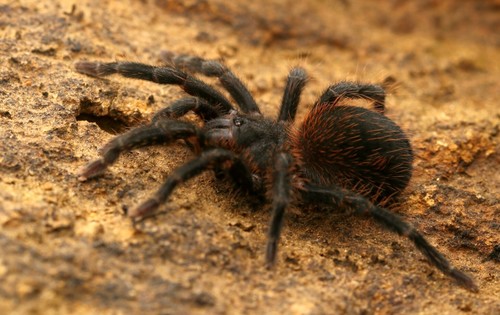
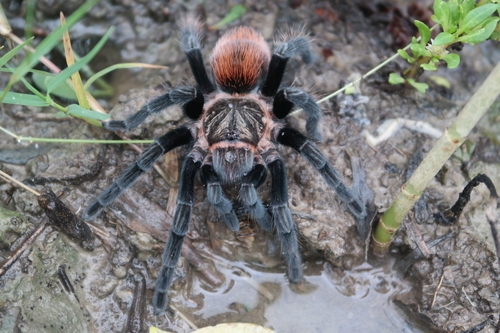
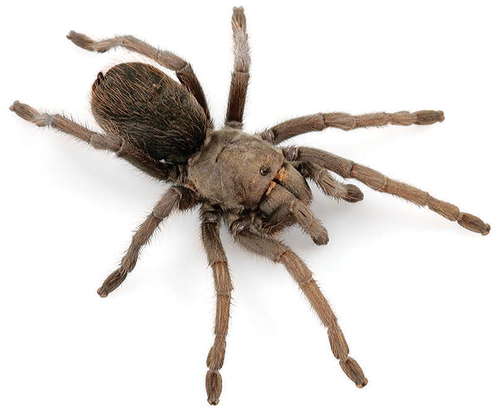
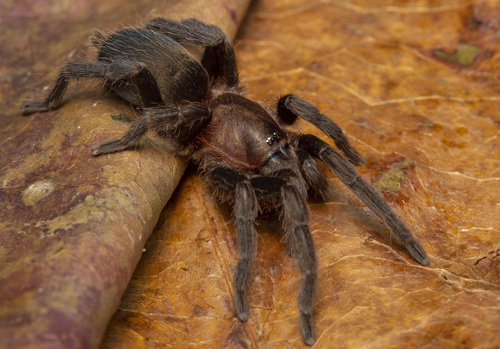
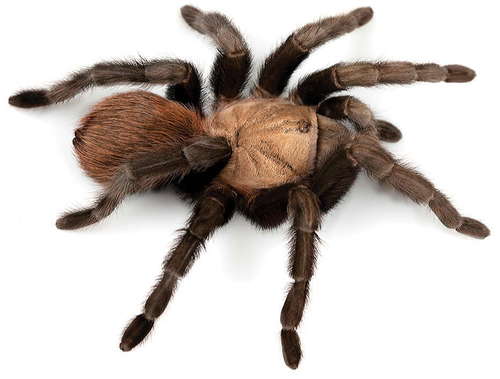
Aphonopelma anax, commonly called the Texas tan tarantula, is one of the largest tarantula species found in the United States. At full maturity, most individuals reach a leg span of 5 inches, and some females reach a 6-inch leg span. Like most species in the Aphonopelma genus, it grows very slowly and takes several years to reach maturity. As with most tarantulas, females are much larger and bulkier than males. Mature males have longer leg spans, smaller bodies, and specialized bulbs on the ends of their pedipalps that they use for mating. As its common name suggests, A. anax’s coloration is primarily made up of tan and dark brown shades. It is similar in color to Aphonopelma hentzi, another common tarantula species from Texas, but A. anax is noticeably darker. Like many New World tarantulas, this species has urticating hairs, but it does not have stridulating hairs on its chelicerae.
This tarantula is distributed across southeastern Texas (documented specifically in Cameron County and Kleberg County) and northern Mexico. Its range falls in a semiarid climate, where it inhabits regional grasslands, shrub forests, and even urban areas. Like most tarantulas, A. anax does not build a typical web, and instead lives in a silk-lined burrow. While this species can dig its own burrow, most individuals modify preexisting burrows or other suitable habitats, which include dead trees, empty rodent burrows, wood stacks, and natural crevices.
In the species’ life cycle, female A. anax can lay hundreds of eggs at a time. Females weave an egg sac to hold the eggs, which they guard aggressively inside their burrow. Females also turn the egg sac regularly to prevent embryo deformations, a behavior called brooding. The eggs hatch after several weeks, and spiderlings may remain with the female for some time before dispersing to live independently. Females are reported to live up to 40 years; no study has tracked individuals for this full length of time, so their actual maximum lifespan may be longer. Males rarely live more than two years after reaching maturity.