About Aphelocoma woodhouseii (S.F.Baird, 1858)
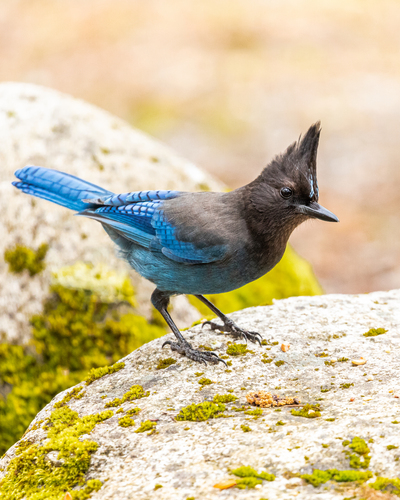
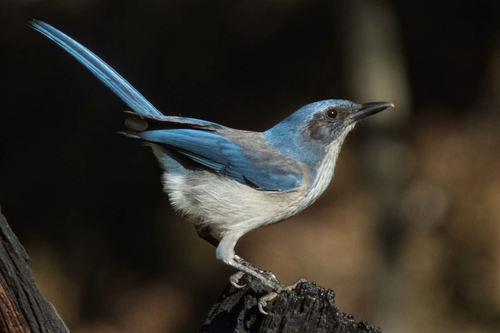
Woodhouse's scrub jay, scientifically named Aphelocoma woodhouseii, is a medium-sized bird. It measures approximately 27 to 31 centimeters (11 to 12 inches) long including its tail, has a 39 centimeter (15 inch) wingspan, and weighs around 80 grams (2.8 ounces). This species has blue coloring on its head, wings, and tail, a gray-brown back, and grayish underparts. Its throat is whitish, marked with a partial blue breast band called a "necklace". Its call is described as "harsh and scratchy". When compared to the California scrub jay, Woodhouse's scrub jay has duller blue coloration, darker gray underparts, a less distinct blue necklace, and a straighter bill. As its common name suggests, Woodhouse's scrub jay inhabits areas of low scrub. It prefers pinon-juniper forests, oak woods, and edges of mixed evergreen forests, and sometimes lives in mesquite bosques. This bird is very common west of the southern Rocky Mountains, and can also be found in scrub-brush, boreal forests, and temperate forests. Like many other corvids, Woodhouse's scrub jays exploit temporary food surpluses by storing food in scattered caches across their territories. They rely on highly accurate, complex memories to recover these hidden caches, often even after long periods of time have passed. While collecting and storing food, these jays demonstrate an ability to plan ahead when choosing cache sites, to ensure they will have enough food volume and variety for the future. Woodhouse's scrub jays can also use their accurate observational spatial memories to steal food from caches created by other members of their own species. To protect their own caches from potential thieves, food-storing Woodhouse's scrub jays use a number of strategies that lower their risk of theft. Related Western scrub jays, a group that includes this species, are also known to hoard and bury brightly colored objects. Woodhouse's scrub jays have a mischievous nature, and will engage in outright theft. They have been observed stealing acorns from acorn woodpecker caches, and robbing seeds and pine cones from Clark's nutcrackers. Some Woodhouse's scrub jays steal acorns that they have watched other jays hide. When these jays go to hide their own acorns, they first check to make sure no other jays are watching. Western scrub jays sometimes land on the backs of mule deer to eat ticks and other parasites living on the deer. The deer appear to benefit from this behavior, and often stand still and hold their ears up to give the jays access. These scrub jays will even eat peanuts directly from a human hand.