About Apamea sordens (Hufnagel, 1766)
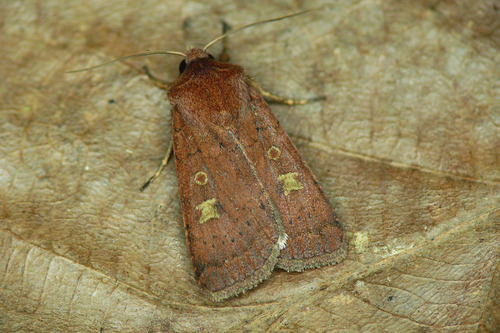
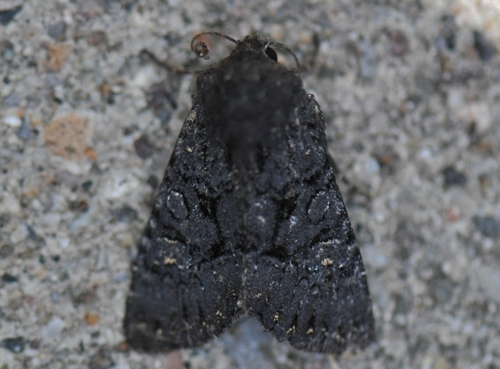
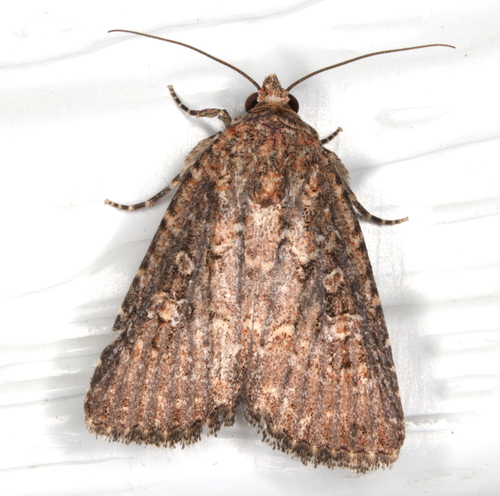
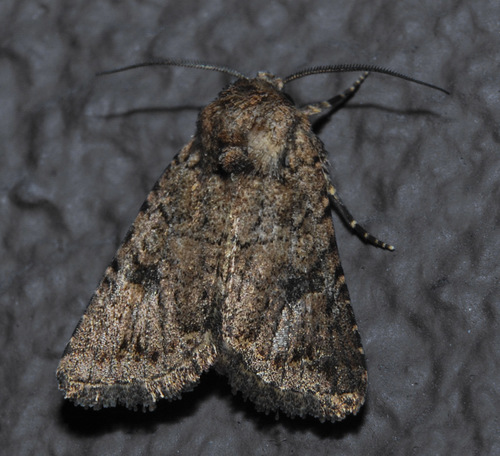
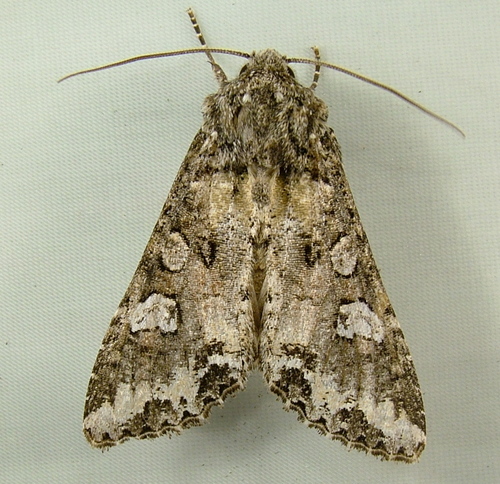
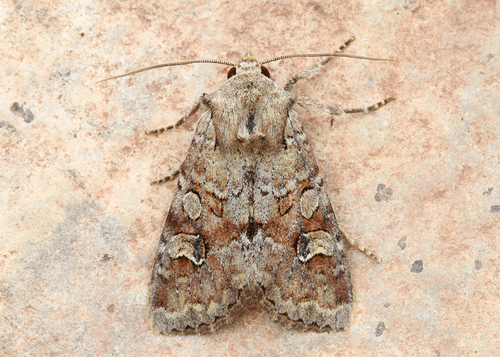
The forewing of Apamea sordens is dull lilac grey, flushed with fawn colour, especially in the median area. It features a black, semibifid streak extending from the base below the cell. The lines are brownish, double, and indistinct; the median shade is dark grey or fawn colour, diffuse and prominent. The orbicular stigma is pale with a black edge. The reniform is large with a grey centre, blackish in the lower lobe, with a pale annulus and black outline. The claviform is small with a dark outline. The submarginal line is dull, with darker shades in places on each side. The hindwing is greyish fuscous, paler towards the base. The form basistriga Stgr. has bluish grey ground colour except for the median area, and the black basal streak is stronger. This form is recorded from western Turkestan, eastern Siberia, Japan, and China, also from Norway; a small series from Pescocostanzo, Italy, seems referable to this form. The aberration grisescens Stgr. from Tibet and Turkestan is altogether paler and greyer. The aberration unicolor Tutt is a melanistic form from the north of England, in which the ground colour is dark reddish brown with a purplish tinge, the stigmata and lines are more or less obscured, and the hindwing is much darker. Pallida Tutt and cinerascens Tutt are both grey forms without any rufous admixture: pallida is pale ochreous grey from Ireland, and cinerascens is dull ashy grey from northern England. This latter form probably occurs in other localities, and is distinct from Staudinger's Central Asiatic form grisescens, for which Spuler quotes Finland and Esthland with a question mark as localities. In the British Isles, this species flies in May and June. The larva feeds on various grasses, including oats, fescues, barleys, canarygrasses, timothy, ryes, wheats, and wild rice. This species overwinters as a larva, feeding in mild weather throughout the season. The larva is grey brown with black tubercles. The dorsal line is broad and whitish; the subdorsal line is finer. The spiracular line is broadly whitish, edged above with dark. When quite young in autumn, it feeds in the grains of corn; after hibernation, it feeds on fresh lower leaves and on grasses. Its habitat includes fields, grasslands, and steppe.