About Apamea epomidion (Haworth, 1809)
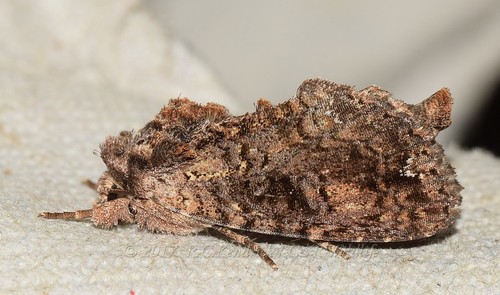
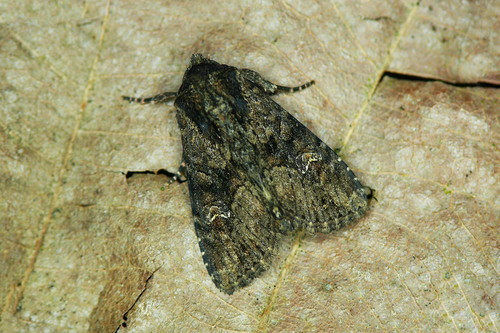
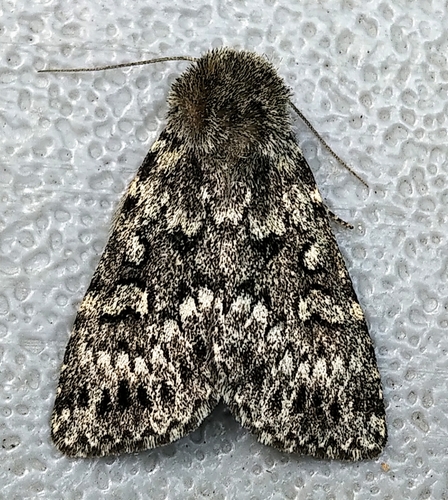
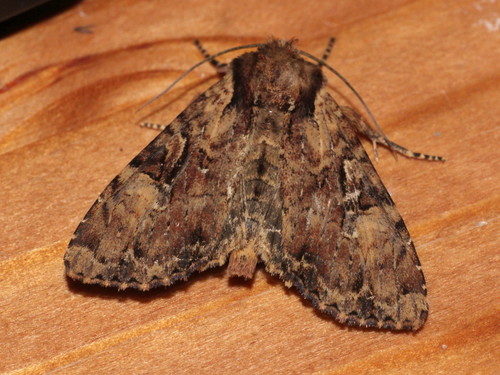
Apamea epomidion, commonly known as the clouded brindle, is a moth species belonging to the family Noctuidae, subfamily Hadeninae. Adrian Hardy Haworth first formally described this species in 1809. This moth is distributed across continental Europe, the British Isles, Sweden, and Central Asia. It also occurs in the Altai Mountains, western Siberia, and the Amur region. The wingspan of Apamea epomidion ranges from 40 to 46 mm. Its forewings are grey brown or pale liver-colored. The inner and outer lines on the forewings are double and obscurely marked. There is a thick black streak running from the base below the cell, with a more diffuse black streak obliquely below this streak, above the inner margin. The claviform stigma is small and outlined in black. The orbicular stigma is oblique, with a brown center and a pale ring. The reniform stigma is pale, and is only defined on its inner edge by a brown line that has a pale dot at its lower end; the cell between the orbicular and reniform stigma is dark brown. The submarginal line is pale, indented at each fold, and is preceded by black blotches on the costa and the folds; dark marks follow this line only on the folds. The hindwings are brownish fuscous, paler toward the base, and have a dark cell spot. Very often, the entire forewing is suffused with reddish brown, which makes the paler transverse markings stand out; this form is called characterea Hbn. An extreme development of this reddish brown suffusion, where the basal area above the black streak remains prominently pale, is the aberration epomidion Haw. Alopecuroides Spul., from Bukowina, is a form where the entire forewing is red-brown, matching the appearance of the alopecurus Esp. form of rurea F. Discrepans Stgr., now classified as a subspecies of Apamea aquila Donzel, 1837 from Ussuri, is described as much darker, with forewing coloration matching that of gemina Hbn. Adult moths of this species fly during June and July. The larvae feed on grasses and other low-growing plants.