About Antigonon leptopus Hook. & Arn.
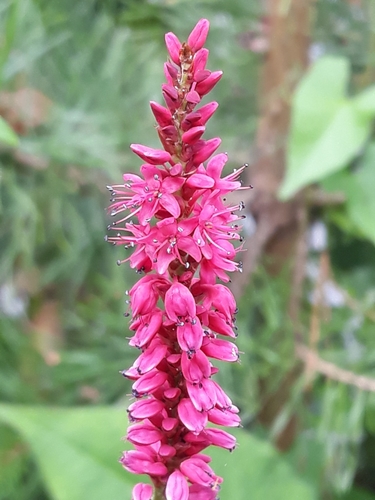
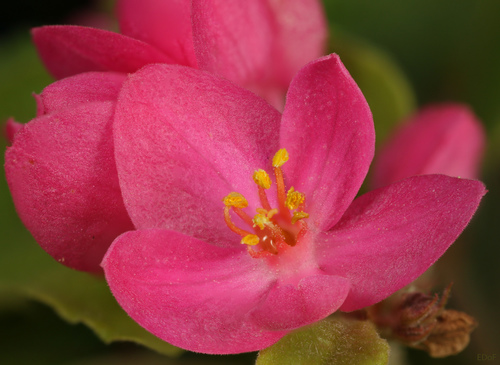
Antigonon leptopus is a fast-growing climbing vine that clings using tendrils and can reach over 7 meters in length. Its leaves are cordate (heart-shaped), sometimes triangular, and measure 25 to 75 millimeters long. Flowers grow in panicles, clustered along the central rachis, and bloom in pink or white from spring to autumn. This species forms underground tubers and large rootstocks, is a prolific seed producer, and its seeds float on water. A wide range of animals including pigs, raccoons, and birds eat the fruit and seeds and spread them. If the plant is cut back or damaged by frost, its tubers will resprout.
Aboriginal inhabitants of Baja California Sur prepared Antigonon leptopus for consumption in a method similar to making popcorn. To toast the seeds, they placed the seeds in a flat basket woven from strips torn from flexible twigs to form a solid surface. Live coals were placed on top of the seeds, and the basket was shaken with both hands so the coals would toast the seeds without burning the basket. After toasting was complete, the spent coals were removed. With this method, most of the seeds burst open to expose a white meal. The seeds were then separated from their husks by tossing them into the air from the basket, a step similar to the wheat winnowing method used in Spain. The seeds were then ground and the resulting meal was eaten. As an alternative preparation, the seeds could be boiled and made into fried cakes.