About Anticlea badiata (Denis & Schiffermüller), 1775
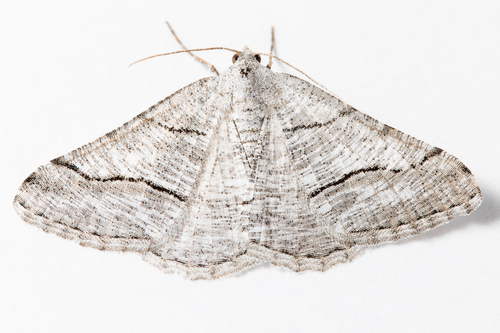
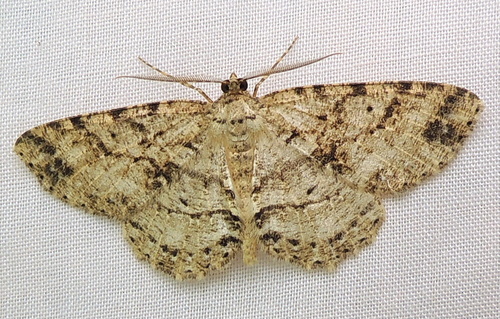
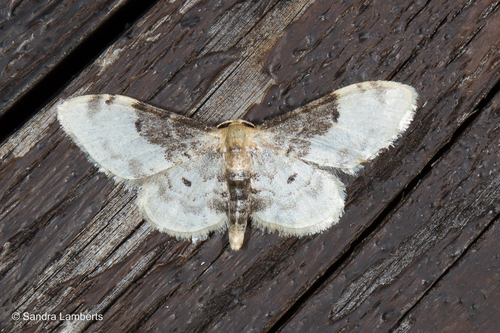
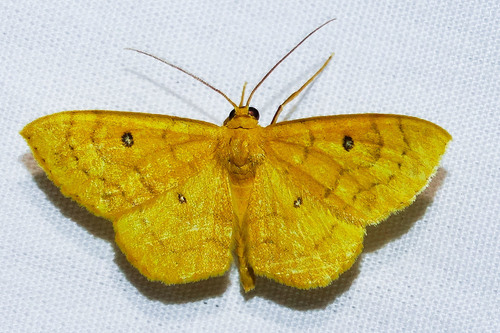
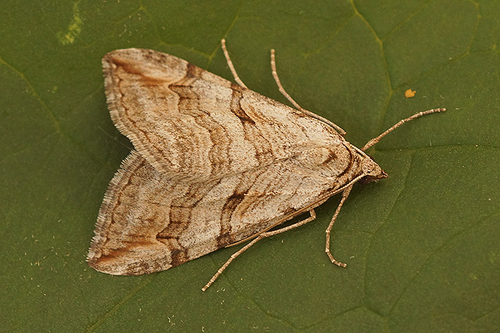
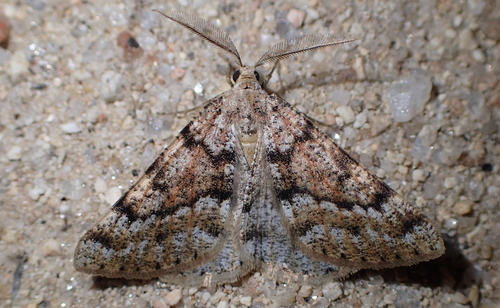
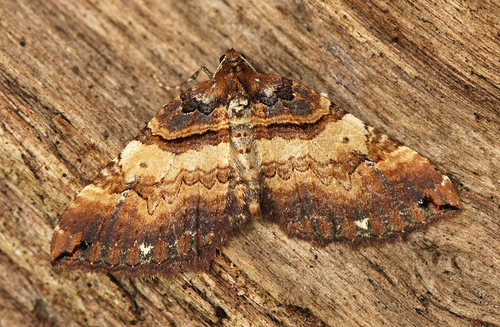
Earophila badiata, commonly known as the shoulder stripe, is a moth species belonging to the family Geometridae. This species was first described by Michael Denis and Ignaz Schiffermüller in 1775, and its currently accepted scientific name is Anticlea badiata (Denis & Schiffermüller), 1775.
The species is distributed across most of Europe and North Africa, extending east to the Altai Mountains in the eastern Palearctic. Its wingspan measures 25 to 30 mm, and adults vary widely in both color and size. Several named aberrations are recognized: ab. pallida Lambill. is paler than the typical form, with only lightly darkened basal area, undarkened distal area, and a whitish median band that lacks a blue-grey spot distal to the wing cell; ab. rectifasciaria Lambill. has a pale median area that is one-third broader than usual, not crossed by internal lines, with clearly marked outer lines that bound the area. Ab. alpestris Neuburger, collected from Tyrol at 3400 meters, has a brown median area, a moderately darkened distal area with no pale sections, and also slightly darker brown hindwings. In ab. subbadiata Strand, the median band is pale, narrow, interrupted in the middle, and its posterior portion is sometimes broken into separate spots.
The larva is elongated and cylindrical, with a distinct rounded head that is orange with a large black spot on each side. The larva's dorsal body color is highly variable, ranging from green and purple to slaty grey. It has a dark spot on the side of the prothoracic leg, another dark spot on the dorsal side of the 10th abdominal segment, white dorsal tubercles, and black lateral tubercles. The pupa is rather stout, dark glossy red-brown with a black anal segment, and a short, thick cremaster.
Adult moths fly from mid-March to May in two generations per year. Larvae feed on Rosa species, and can be found from March to July. The species overwinters as a pupa in loose soil.