About Anticarsia irrorata (Fabricius, 1781)
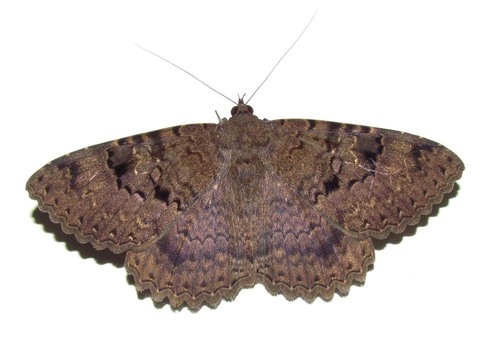
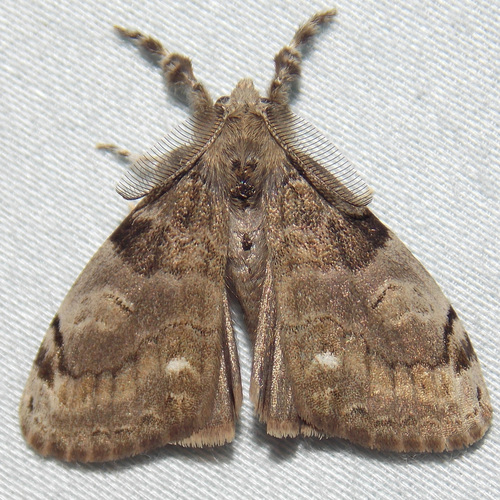
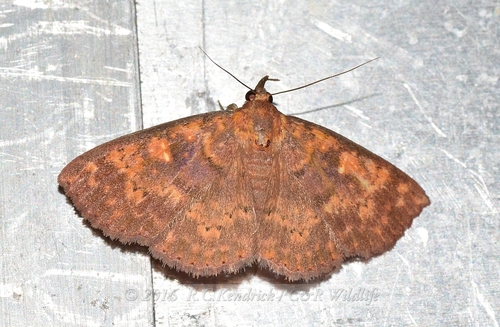
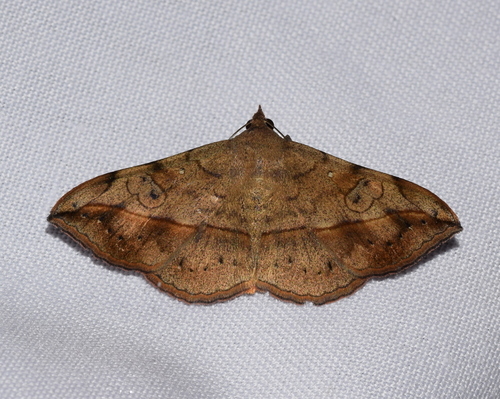
Anticarsia irrorata (Fabricius, 1781) has a wingspan of approximately 40–46 mm. On this species, the third joint of the palpi is rather shorter than it is in the typical section of the group. Males lack tufts on their tibia. In males, the hindwings have normal neuration, and have no fold on the inner margin. Male antennae bear bristles and cilia. The moth is light brownish, with darker areas on the distal portion. The forewing is marked with a diagonal line and a row of black dots. The hindwing has similar markings to the forewing. The underside of the wings has lighter brownish dots and a white spot. The larva of Anticarsia irrorata is light green. It has a dark green dorsal line with a yellowish center, plus wider spotted lines on either side of this dorsal line. The larva’s spiracles are white with black edges. The larva moves in a looping motion. Common food plants for this species include species from many legume genera: Cajanus, Cicer, Cyamopsis, Glycine, Lablab, Mucuna, Phaseolus, and Vigna. It has also been recorded feeding on members of the melon genus Cucumis, and grasses from genera including Andropogon, Oryza, Paspalum, and Saccharum.