About Anthropoides paradiseus (A.A.H.Lichtenstein, 1793)
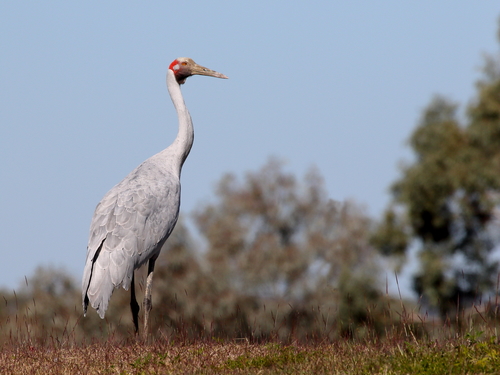
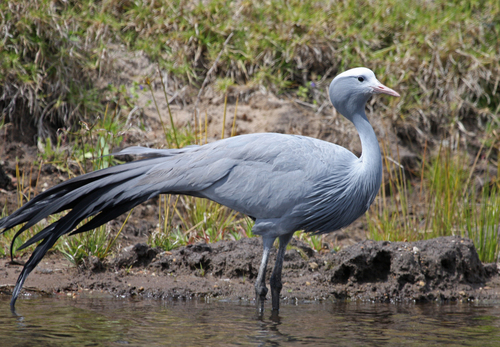
Anthropoides paradiseus, commonly known as the blue crane, is a tall ground-dwelling bird that is fairly small when compared to other members of the crane family. It reaches a height of 100–120 cm (3 ft 3 in – 3 ft 11 in), has a wingspan of 180–200 cm (5 ft 11 in – 6 ft 7 in), and weighs between 3.6–6.2 kg (7.9–13.7 lb). Standard measurements for this species are as follows: wing chord length ranges from 51.4–59 cm (20.2–23.2 in), exposed culmen length ranges from 8–10 cm (3.1–3.9 in), and tarsus length ranges from 20.5–25.2 cm (8.1–9.9 in). The blue crane’s plumage is pale blue-gray overall, and darkens on the upper head, neck, and nape. Plumage from the crown to the lores is distinctly lighter, sometimes appearing whitish. Its bill is ochre to grayish, with a faint pink tinge. Its long wingtip feathers trail along the ground. Primaries range from black to slate gray, with dark coverts, and secondaries are blackish in color. Unlike most cranes, the blue crane has a relatively large head and a proportionately thin neck. Juvenile blue cranes are similar in appearance to adults, but are slightly lighter in overall color, have tawny coloration on the head, and lack the long wing plumes seen in mature individuals. Blue cranes inhabit dry grassy uplands, most commonly pastured grasslands across hills, valleys, and plains with a small number of scattered trees. During the nesting season, they prefer areas with access to both upland and wetland habitats, though they feed almost entirely in dry areas. They are altitudinal migrants: they generally nest in lower grasslands at elevations around 1,300 to 2,000 m, and move to lower altitudes to spend the winter.