About Anthophora plumipes (Pallas, 1772)
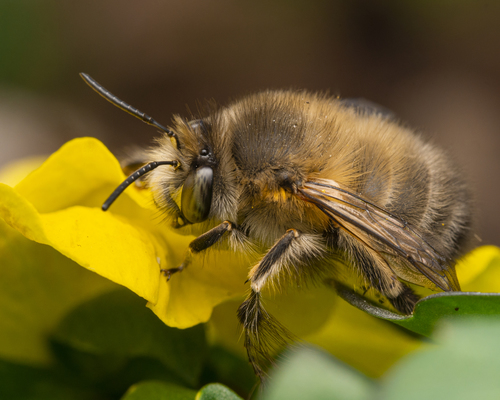
Adult Anthophora plumipes reach a body length of 13–15 millimetres, or 0.5–0.6 inches. Across this species' geographic range, there are numerous distinct color forms, which has led to the species being published and recorded under many different scientific names. Anthophora plumipes displays clear sexual dimorphism, and all individuals of the species have a densely hairy body. Males most often have bright reddish brown or gray hair, while females are usually entirely black or dark brown. Females additionally have distinct reddish orange scopal hairs on their hind tibia. The middle legs of males are significantly elongated. Males can also be told apart from females by the long hairs covering their mid tarsi, and the yellow or cream colored integument on their lower face instead of the black color seen in females. The long tufts of black hairs on the tarsi that give the species its scientific Latin name plumipes are active during mating, though their exact purpose remains unknown. This bee species is widespread across most of Europe and Asia, ranging from Britain to China, Japan, and the Near East, and it can also be found in North Africa. The species was introduced to the United States during the 20th century, and it was first recorded spotted in Ireland in April 2022. These bees most commonly live in gardens, open woodland areas, and coastal sites.