About Anthidium oblongatum (Illiger, 1806)
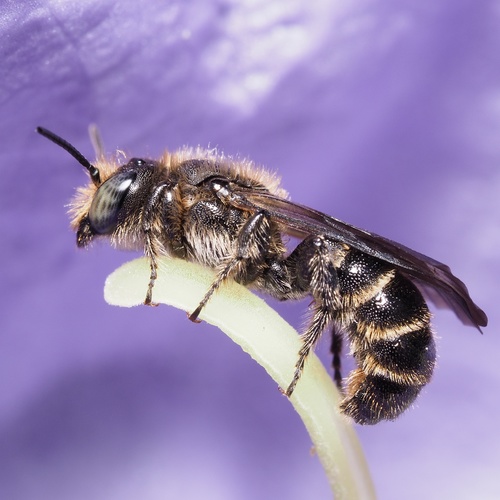
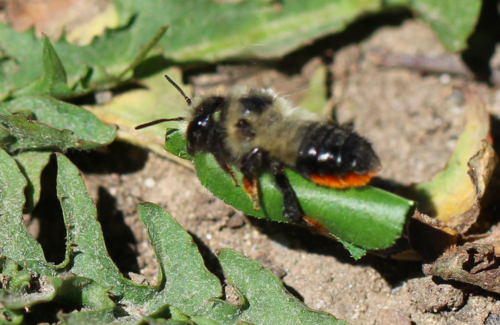
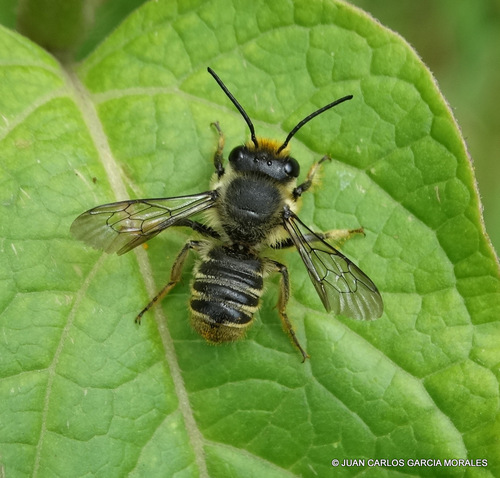
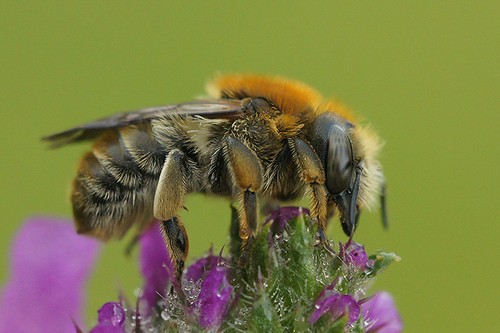
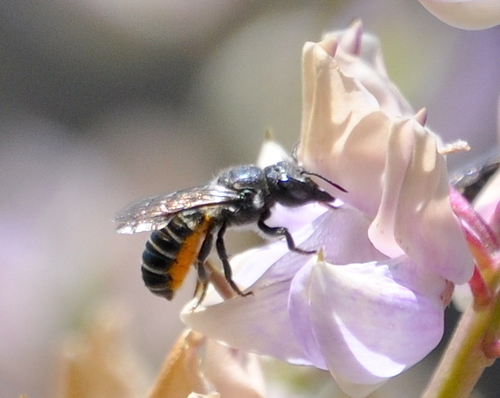
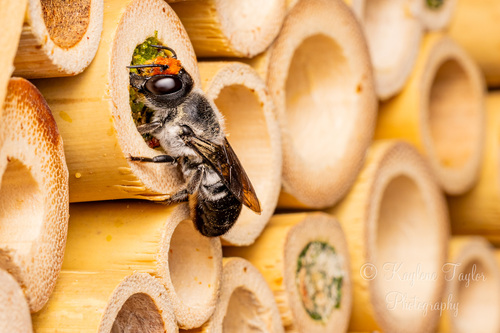
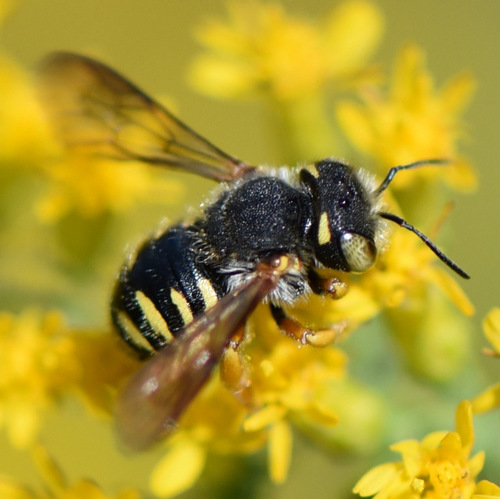
Anthidium oblongatum, commonly known as the oblong woolcarder bee, is a species of bee in the family Megachilidae, which includes leaf-cutter, carder, and mason bees. It is native to Eurasia and North Africa, and has been introduced to North America. Its native range extends across Eurasia from Portugal, through southern, central, and eastern Europe, Ukraine, southern Russia, and Siberia (east to Tuva), as well as through Asia Minor and the Caucasus to the Central Asian mountains. According to 2006 information from Wu, its range also includes Inner Mongolia. In Europe, it occurs north to the Netherlands, Brandenburg, central Poland, and Belarus, and south to Sicily (it is not found in Corsica and Sardinia), Thessaly (it is not found in Crete and Cyprus), Iran, and Afghanistan. It has also been recorded in Morocco. The species was first detected as an introduced species in the eastern United States in 1995, and can now be found throughout northeastern North America, Colorado, Utah, and the Pacific Northwest of North America. A. oblongatum prefers warm, dry locations such as flowering grasslands, hedges, and dry stone walls. It can also occur in ruderal sites including weathering heaps, road embankments, railway embankments, flood dams, and populated areas such as flowering fallow land and rock gardens. Nesting sites are often spatially separated from pollen sources and nesting resources. It occurs from lowlands up to montane elevations. This species produces one generation per year, with a flight period from mid-June to early August. A. oblongatum builds nests inside cavities. It prefers to occupy available 5–6 mm wide horizontal crevices, such as those found in dry stone walls and slaty, weathered rock, but will also use other types of cavities, including tunnel-like cavities in buildings that are also used by Anthidium manicatum. Brood cells are constructed from vegetable wool. The species will colonize gardens, especially those that provide suitable food plants and building material sources. A. oblongatum applies a rust-colored glandular secretion to the outside of its nest. Pollen is collected almost exclusively from plants in three families: Fabaceae (especially species of Lotus and Onobrychis), Crassulaceae (especially species of Sempervivum and Sedum), and Resedaceae. Preferred species include Lotus corniculatus, Onobrychis viciifolia, and Sedum reflexum. Two parasitic species have been recorded associated with A. oblongatum: Stelis punctulatissima has been reared from A. oblongatum nests in France, and observations from Germany and Switzerland indicate Chrysis marginata is very likely another brood parasite of the species.