About Anthidium florentinum (Fabricius, 1775)
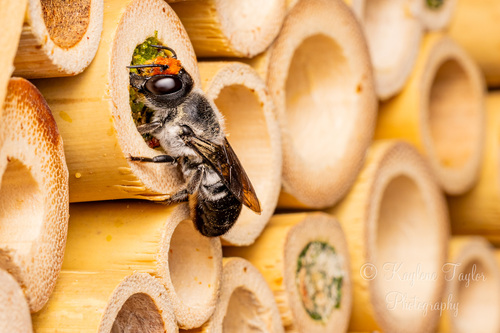
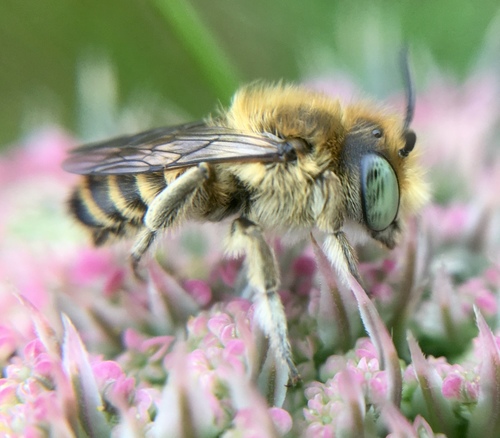
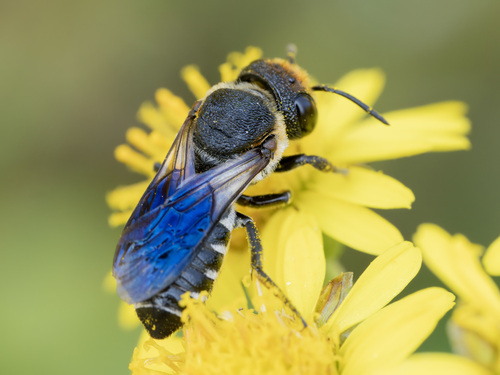
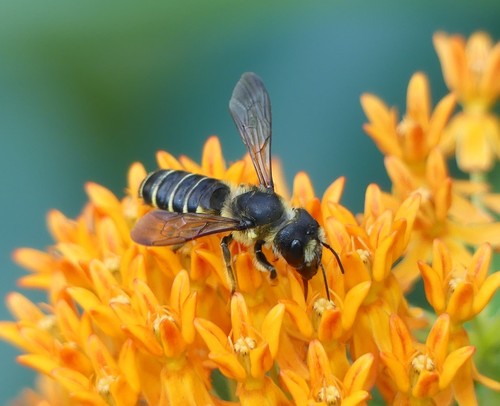
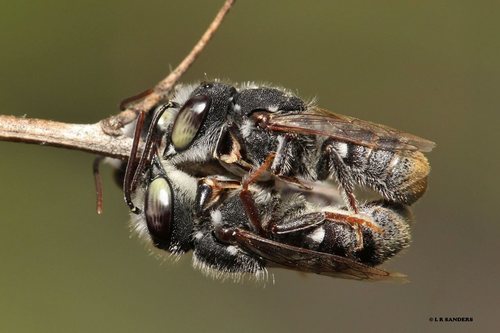
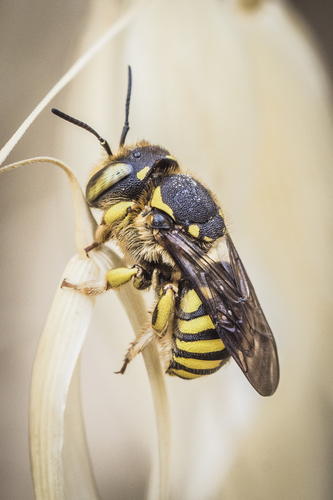
This species is the medium to large bee Anthidium florentinum. Individuals of both sexes have a black abdomen, with two yellow bands present on each abdominal tergite. Males can be identified by grey or whitish hairs growing on the sides of the abdomen. Males are larger than females. Females have pale yellowish pollen brushes on the underside of their abdomen. Nests of this species are built inside crevices or abandoned nests left by other insects, and are lined with chewed plant fibers. One study examined populations of A. florentinum in southern France and A. manicatum in southern Germany. Unlike most solitary bee species, these two populations had more female individuals than male individuals, males were larger than females, and adult males and females were active flying during the same time periods of the year. P. Wirtz and colleagues propose that this unusual pattern can be explained by two factors: prolonged sexual receptivity in females, and males defending easily protected resources within their territories.